
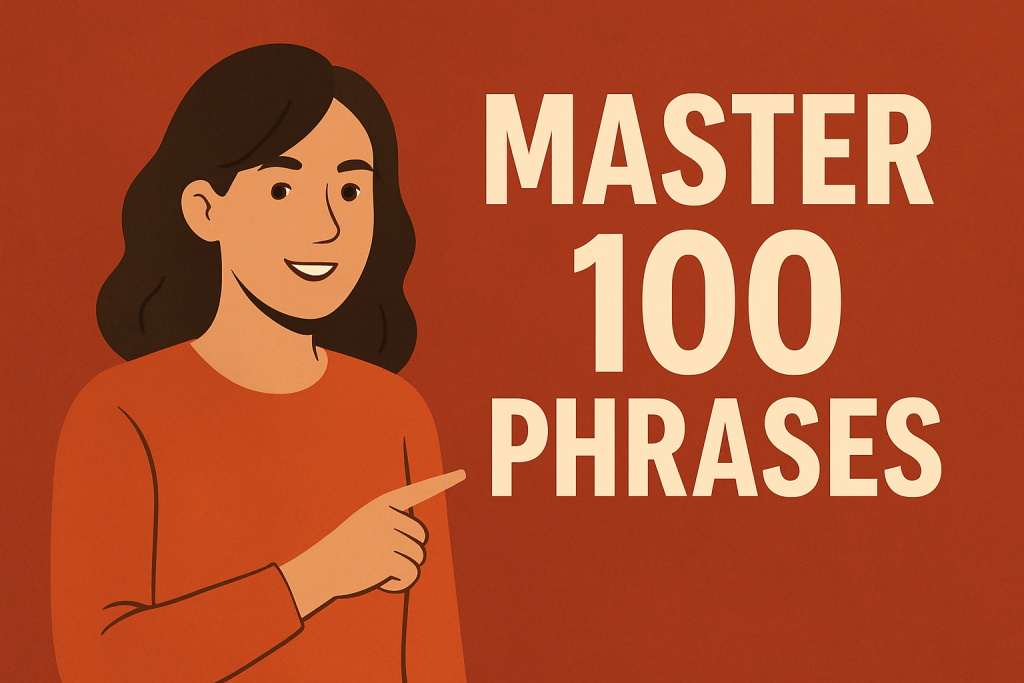
Have you ever wondered why some language learners seem to progress faster than others, effortlessly navigating conversations while you’re still struggling with basic vocabulary? The secret might be simpler than you think: focusing on the most commonly used phrases rather than isolated words.
This approach isn’t just intuitive—it’s backed by scientific research and proven learning methodologies that can transform your language learning journey from frustrating to fulfilling.
The Linguistic Science Behind Common Phrases
According to renowned linguist Paul Nation’s groundbreaking research on language acquisition, just as there are high-frequency words in any language, there are also high-frequency phrases that form the backbone of daily communication. These phrases appear consistently across conversations, regardless of the topic, making them invaluable tools for language learners seeking rapid progress.
Nation’s frequency analysis reveals that mastering these common expressions provides learners with a disproportionate advantage in real-world communication. Instead of memorizing thousands of individual vocabulary words, focusing on essential phrases creates immediate practical value and confidence in speaking situations.
What Makes the Top 100 Phrases So Powerful for Language Learning?
These aren’t random expressions picked from outdated textbooks or academic curricula. The most effective phrase collections are carefully selected based on rigorous linguistic analysis:
Frequency Analysis Across Multiple Contexts
Modern corpus linguistics allows us to analyze millions of conversations, identifying phrases that appear consistently across different situations, age groups, and social contexts.
Practical Utility in Everyday Situations
Each phrase serves multiple communication purposes, maximizing your return on learning investment. A single well-chosen phrase can help you navigate various social and practical scenarios.
Cross-Cultural Relevance
The best phrase collections transcend cultural boundaries, focusing on universal human communication needs that apply whether you’re in Madrid, Munich, or Montreal.
Immediate Applicability for Travelers and Beginners
These phrases are designed for immediate use, giving you confidence to engage in real conversations from day one of your language learning journey.
The Five Essential Categories Every Language Learner Needs
When you master the top 100 phrases in any language, you’ll gain conversational ability across these critical areas:
1. Social Interaction and Relationship Building
Mastering social phrases is crucial for building rapport and making meaningful connections. This category includes:
- Greetings and farewells: Beyond simple “hello” and “goodbye,” these phrases help you navigate formal and informal social situations appropriately
- Small talk initiators: Phrases that help you start conversations naturally and keep them flowing
- Polite comments and expressions of gratitude: Essential for showing respect and appreciation in any culture
- Personal introductions: Not just stating your name, but engaging phrases that invite further conversation
2. Practical Requests and Daily Needs
These phrases solve immediate problems and help you navigate daily life:
- Asking for specific objects: Clear, polite ways to request what you need
- Requesting assistance with activities: Phrases that help you get help without sounding demanding
- Expressing needs and wants: Articulating your preferences and requirements effectively
- Shopping and money-related expressions: Essential for any commercial interaction
3. Navigation and Travel Essentials
Perfect for travelers and anyone living in a new country:
- Asking for directions: Multiple ways to request navigation help
- Transport-related phrases: Bus, train, taxi, and walking-related expressions
- Distance and time expressions: Understanding and communicating about space and time
- Location-specific requests: Finding specific places and understanding spatial relationships
4. Essential Services and Emergency Situations
Critical phrases for health, safety, and daily services:
- Restaurant and food ordering: Navigating menus, dietary restrictions, and dining etiquette
- Health and medical assistance: Describing symptoms and requesting medical help
- Bathroom-related needs: Practical but essential for comfortable daily life
- Emergency situations: Critical phrases for urgent situations and safety
5. Clarification and Effective Communication
These meta-communication phrases improve your overall language learning:
- Expressing comprehension or confusion: Honest communication about your understanding level
- Asking for repetition or clarification: Strategies for continuing conversations when you don’t understand
- Agreeing or disagreeing appropriately: Culturally appropriate ways to express opinions
- Apologizing and acknowledging mistakes: Essential for maintaining relationships while learning
The Learning Psychology Behind Phrase Mastery
Modern cognitive research reveals why learning complete phrases rather than isolated words offers several significant advantages for language acquisition:
Contextual Learning Advantage
Phrases provide built-in context for vocabulary, making them easier to remember and use appropriately. Instead of learning “book” as an isolated word, learning “Can I borrow this book?” immediately provides usage context and practical application.
Chunking Efficiency in Language Processing
Our brains naturally process language in chunks rather than individual words. This neurological efficiency means phrases align with how we naturally think and communicate, making them easier to store and retrieve during conversations.
Pronunciation Flow and Natural Speech Patterns
Practicing complete phrases helps you master the natural rhythm, intonation, and connected speech patterns of your target language. This is particularly important for languages with significant pronunciation differences from your native tongue.
Cultural Competence and Nuance
Common phrases often contain cultural nuances, politeness levels, and social context that isolated vocabulary cannot convey. Learning phrases teaches you not just what to say, but how and when to say it appropriately.
Effective Strategies for Mastering Essential Phrases
The most successful language learners combine several proven methods in their phrase-learning approach:
Visual Association Techniques
Connecting each phrase with relevant images creates powerful mental links that bypass your native language, leading to more natural and faster recall during conversations.
Phonetic Guidance and Accurate Pronunciation
Using International Phonetic Alphabet (IPA) symbols alongside audio recordings ensures accurate pronunciation from the beginning, preventing bad habits that are difficult to correct later.
Spaced Repetition for Long-Term Retention
Reviewing phrases at scientifically optimized intervals dramatically improves long-term retention. This method, popularized by flashcard systems like Anki, ensures phrases move from short-term to long-term memory effectively.
Bidirectional Practice for Neural Pathway Strengthening
Testing yourself both from image to phrase and phrase to image strengthens neural pathways in multiple directions, improving both comprehension and production skills.
Your Flexible Roadmap to Conversational Fluency
The beauty of phrase-based learning lies in its adaptability to your schedule and learning intensity. Your timeframe depends entirely on how many new phrase flashcards you want to learn each day:
- Learning 1 phrase per day = 100 days to complete all essential phrases
- Learning 5 phrases per day = 20 days to master the collection
- Learning 10 phrases per day = just 10 days for complete mastery
Ongoing Practice and Mastery
Regardless of whether you completed the initial learning in 10 days or 100 days, the real magic happens during the review phase. Using spaced repetition, continue practicing all phrases regularly to move them from short-term to long-term memory, ensuring you can recall them naturally during real conversations.
Transform Your Language Learning with Smart Flashcard Systems
Ready to implement this scientifically-backed approach to language learning? The key is having access to professionally designed materials that incorporate all these learning principles.
At Speakada, our flashcard systems are built on exactly these research-backed principles, incorporating visual association, spaced repetition, phonetic guidance, and bidirectional practice. Instead of spending countless hours researching which phrases to learn and how to structure your practice, you can focus your energy on actual learning.
Our comprehensive approach includes:
- Pronunciation flashcards with IPA guidance and audio recordings
- Vocabulary flashcards featuring the most essential phrases and words
- Grammar flashcards that complement your phrase learning with structural understanding
Stay Connected with SPEAKADA WEEKLY
Want to continue receiving science-backed language learning strategies and tips? Subscribe to our SPEAKADA WEEKLY newsletter for regular insights on smart language learning techniques, Anki flashcard optimization, and practical study strategies that will accelerate your progress.
Our newsletter delivers actionable advice directly to your inbox, helping you stay motivated and informed about the latest developments in language learning research and methodology.
Conclusion: Science-Based Language Learning Success
The science is clear: focusing on high-frequency phrases rather than isolated vocabulary provides a faster, more effective path to conversational fluency. By understanding the linguistic research behind this approach and implementing proven learning strategies, you can dramatically accelerate your language learning progress.
Whether you’re learning Spanish, French, Italian, German, English, Dutch, or Polish, these principles apply universally. The key is consistent practice with professionally designed materials that incorporate visual association, spaced repetition, phonetic guidance, and bidirectional learning.
Start your journey toward confident conversations today by focusing on these essential phrases—your future multilingual self will thank you.
Ready to transform your language learning with scientifically-designed flashcards? Explore our comprehensive collection of pronunciation, vocabulary, and grammar flashcards at Speakada.com, and don’t forget to subscribe to SPEAKADA WEEKLY for ongoing language learning insights and strategies.
How to Learn Vocabulary in a Smart and Effective Way Embarking on a journey to master a new language is Read more
Learning a new language can feel overwhelming when you consider that most languages contain hundreds of thousands of words. But Read more
Learning a new language can feel overwhelming. With hundreds of thousands of words in most languages, where do you even Read more
Have you ever found yourself knowing hundreds of vocabulary words in your target language but freezing up when it's time Read more