IELTS ESSENTIAL VOCABULARY: LEARN THE TOP 2000 WORDS FOR BANDS 1–4

The IELTS Essential Vocabulary Flashcards are a digital Anki deck containing the 2000 most common English words — the foundation of IELTS success at Bands 1–4. Based on research by linguists Michael Lewis, Paul Nation, James Milton, and Stephen Krashen, you will learn these words gradually in the context of real English sentences and basic monolingual definitions.
After you learn these 2000 words, you will be able to understand about 90% of any given text, according to the research findings of renowned linguist Paul Nation — giving you the reading and listening comprehension foundation that every IELTS candidate needs.
According to linguist James Milton, mastering the top 2000 words aligns with the A2 CEFR level — which broadly corresponds to IELTS Bands 1–4. This deck is your essential first step: build this vocabulary foundation, and you’ll be ready to progress to the Advanced Vocabulary (Bands 5–8) deck and beyond.
Available in both Received Pronunciation (British English) and General American English.

Language: English (Received Pronunciation or General American)

Flashcards: 2000 (2000 English Words x 1 Card Type, each with 2 variations)

Time: Approx. 3–9 Months to Complete

IELTS Level: Bands 1–4 (Beginner to Lower Intermediate)
2 FLASHCARD VARIATIONS FOR EACH OF THE 2000 ESSENTIAL IELTS WORDS
Below, you can see the IELTS Essential Vocabulary Flashcards for Anki in action. There are 2 different flashcard variations for each word, which are randomly shown. Each flashcard includes Part of Speech (POS), IPA, frequency rank, audio of the word, an English monolingual definition, an example sentence, and hidden translation hints for when you need extra help.


BUY THE IELTS VOCABULARY BUNDLE NOW
(ONLY $297)

GET THE ULTIMATE IELTS FLASHCARDS BUNDLE NOW
(ONLY $597, SAVE $194)
2000 WORDS = 90% COMPREHENSION = IELTS BAND 1–4 FOUNDATION
Research by linguists Professors Stuart Webb and Paul Nation found that the top 2000 words account for 90% of the words used in general texts — and it is this vocabulary foundation that underpins reading and listening comprehension at the lower IELTS band levels.
| Number of Words (by Frequency) | Comprehension Level | Approx. IELTS Band |
| 1,000 words | ~75% comprehension of any text | Bands 1–3 |
| 2,000 words | ~90% comprehension of any text | Bands 3–4 |
| 2,001–5,000 words | ~95% comprehension of any text | Bands 5–8 |
“Word frequency” refers to how often a given word appears in a language. English contains hundreds of thousands of words — but when we analyse their frequency in speech, books, and media, it becomes clear that not every word has equal value for IELTS preparation.
Paul Nation, a world-renowned vocabulary acquisition researcher from Victoria University of Wellington, emphasizes the need to use word frequency lists as guidelines for vocabulary study. Learning the 2000 most frequently used words gives you 90% comprehension of English as it is spoken in everyday life — the bedrock of IELTS Listening and Reading performance. This deck is built on that research.
REACH A2/B1 CEFR — THE FOUNDATION OF IELTS BANDS 1–4
Linguist James Milton from Swansea University researched the number of words needed to pass CEFR level exams. His findings show that learning approximately 2000 words places a learner at the A2 CEFR level — broadly equivalent to the vocabulary foundation needed for IELTS Bands 3–4. The CEFR “A” levels correspond to beginner stages of a language, and this is exactly where solid IELTS preparation begins.
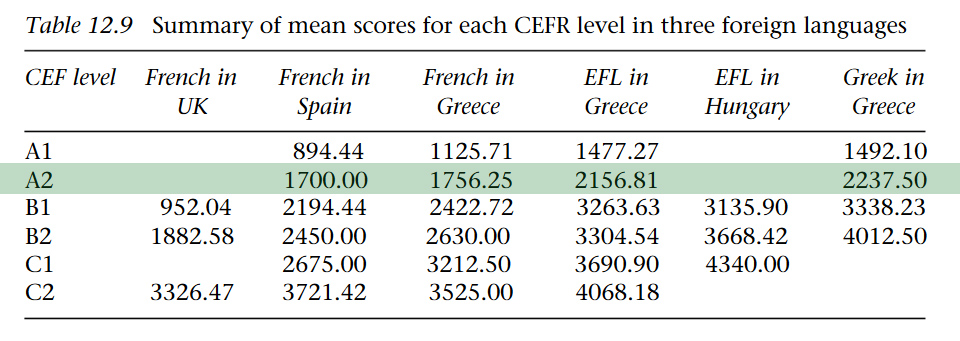
Our aim with the IELTS Essential Vocabulary Flashcards is to get you to this A2/B1 foundation level as efficiently as possible. Once you have mastered these 2000 words, you’ll be well-placed to progress to the Advanced Vocabulary (Bands 5–8) deck, which covers words 2001–5000 and targets the higher IELTS band scores.
BUY THE IELTS VOCABULARY BUNDLE NOW
(ONLY $297)
GET THE ULTIMATE IELTS FLASHCARDS BUNDLE NOW
(ONLY $597, SAVE $194)
BENEFITS OF THE IELTS ESSENTIAL VOCABULARY FLASHCARDS
Learn the 2000 Most Common Words in English with Sentence Examples

Learn the top 2000 IELTS words using real sentence examples so you see each word in context — the way it will appear in IELTS Reading passages and Listening recordings. No reliance on translations means you start building English-to-English thinking from day one. Every flashcard includes audio, IPA, and a monolingual English definition to build interconnected vocabulary networks in your mind.
Pronounce Every Word Correctly — Essential for IELTS Speaking
Each flashcard includes native audio and IPA for the target word and its example sentence. This means you don’t just learn what words mean — you learn how to say them correctly in the IELTS Speaking test, in either British or American English.

Test Your IELTS Vocabulary Knowledge With Spaced Repetition

The built-in spaced repetition system ensures you review the words you find most difficult at the optimal time for long-term retention — so you’re not wasting precious IELTS study hours on words you’ve already mastered. Complete this deck and you’ll have the 90% comprehension foundation needed to start tackling IELTS Reading and Listening texts with confidence.
BUY THE IELTS VOCABULARY BUNDLE NOW
(ONLY $297)
GET THE ULTIMATE IELTS FLASHCARDS BUNDLE NOW
(ONLY $597, SAVE $194)
FREQUENTLY ASKED QUESTIONS
- Why are there no pictures in the Essential Vocabulary flashcards?
- What is the difference between Essential Vocabulary (Bands 1–4) and Advanced Vocabulary (Bands 5–8)?
- Should I learn more than 2000 words for IELTS?
WHY ARE THERE NO PICTURES IN THE ESSENTIAL VOCABULARY FLASHCARDS?
The IELTS Essential Vocabulary Flashcards use sentence-based cards and monolingual definitions as the primary learning method. There are no pictures, and this is intentional — for two core reasons:
1. Think in English — The Way IELTS Demands
In the IELTS Reading and Listening tests, there are no pictures to help you — only English text and spoken English. You need to process meaning directly in English, without mentally translating from your native language. The sentence-based approach of these flashcards trains exactly that skill: understanding English words in English context.
Each flashcard provides a monolingual English definition alongside the example sentence. If you’re unsure of a word’s meaning, you read the English definition first — building synonym networks and reinforcing related vocabulary in the way IELTS Reading passages require. A hidden translation hint is available as a last resort, but you’re encouraged to rely on the English content first.
This approach directly prepares you for the demands of IELTS, where real-life English content — reading passages, listening recordings, speaking prompts — gives you no pictures and no native language support.
2. Learn in “Chunks” — Based on Research From Linguists Michael Lewis & Stephen Krashen
The top 2000 words include many abstract words — “suggest”, “consider”, “likely”, “despite” — that cannot be easily represented with a picture, but which appear constantly in IELTS Reading passages and Listening recordings. The best way to acquire these words is through sentence “chunks”, as promoted by linguist Michael Lewis.
Stephen Krashen’s “input hypothesis” states that learners progress when they encounter language input that is slightly beyond their current level. That is why every flashcard presents the new word inside a real English sentence — giving you the comprehensible input that drives genuine language acquisition, not just rote memorization.
BUY THE IELTS VOCABULARY BUNDLE NOW
(ONLY $297)
GET THE ULTIMATE IELTS FLASHCARDS BUNDLE NOW
(ONLY $597, SAVE $194)
WHAT IS THE DIFFERENCE BETWEEN ESSENTIAL VOCABULARY (BANDS 1–4) AND ADVANCED VOCABULARY (BANDS 5–8)?
The IELTS Vocabulary Bundle contains three progressive decks, each targeting a different vocabulary range and IELTS band level. The Essential Vocabulary deck is the starting point — and understanding how it relates to the Advanced deck will help you plan your study path.
1. Essential Vocabulary (Bands 1–4): The Top 2000 Words
This deck covers the 2000 most frequently used words in English. These are the words that appear in everyday speech, general reading passages, and the kind of straightforward topics tested in lower-band IELTS tasks. Mastering these words gives you ~90% text comprehension and the vocabulary foundation needed to start scoring in the Bands 3–4 range.
Every word is learned through sentence examples and monolingual definitions — not pictures — because the IELTS exam demands English-only comprehension. We recommend completing this deck before moving to Advanced Vocabulary.
2. Advanced Vocabulary (Bands 5–8): Words 2001–5000
The Advanced Vocabulary deck covers words ranked 2001–5000 by frequency — the vocabulary range associated with IELTS Bands 5–8. These are the words that distinguish a Band 5 candidate from a Band 7 candidate in IELTS Reading, Listening, and Writing. Example sentences in this deck use only words from the top 5000, building naturally on what you learned in the Essential deck.
The frequency lists used across both decks are derived from major corpora including the Corpus of Contemporary American English, the British National Corpus, and the Routledge Frequency Dictionary series, supplemented by our own proprietary analysis of billions of words across millions of webpages.
BUY THE IELTS VOCABULARY BUNDLE NOW
(ONLY $297)
GET THE ULTIMATE IELTS FLASHCARDS BUNDLE NOW
(ONLY $597, SAVE $194)
SHOULD I LEARN MORE THAN 2000 WORDS FOR IELTS?
Yes — if you are targeting Band 5 or above, you will need to go beyond 2000 words. But the research is clear: the first 2000 words give you by far the highest return on your study time. Paul Nation’s findings show that 2000 words delivers 90% comprehension, while learning up to 7000 words only adds a further 8%. The Essential Vocabulary deck is therefore your highest-priority starting point, regardless of your target band.
Once you have mastered these 2000 words, the path forward depends on your IELTS goals. For Bands 5–8, progress to the Advanced Vocabulary (Bands 5–8) deck covering words 2001–5000. For candidates targeting Band 7+ in an academic or professional context, the Academic Vocabulary deck adds the 272 most common academic phrases (such as “similar to”, “in some ways”, “some sort of”) plus 43 high-frequency academic words not found in the top 5000 — drawn from Academic Word List research.
But don’t skip ahead. If you haven’t yet mastered high-frequency words like “suggest”, “consider”, “despite”, and “likely”, don’t spend time on lower-frequency academic vocabulary. Master the foundation first — everything else builds on it.
BUY THE IELTS VOCABULARY BUNDLE NOW
(ONLY $297)
GET THE ULTIMATE IELTS FLASHCARDS BUNDLE NOW
(ONLY $597, SAVE $194)
TESTIMONIALS
Hear from the hundreds of IELTS and language learners who use our Anki decks and love them!
“Speakada uses diverse methods of teaching and learning, from visual to vocal, which all makes it easy to learn.”

(International trade diplomat & Language learner)
“I’ve been able to tweak my pronunciation, reducing the mistakes I make & increasing my memory of new words.”

(Corporate Tax Specialist & Language learner)
“Speakada motivates me by adapting to my schedule. I can learn in my own time. Now language learning is more fun.”

(Emergency medical doctor & Language learner)
“Thanks to Speakada I was able to save hours making flashcards and instead, focus on learning with confidence.”

(Business lawyer & Language learner)
YOUR PURCHASE IS SAFE
Your purchase is safe. All credit card information is processed on a secure server by a trusted payment service provider, such as Stripe. If you buy and receive our product, but it is significantly different from our original description on our website, then simply email us within 7 days to request a refund.