
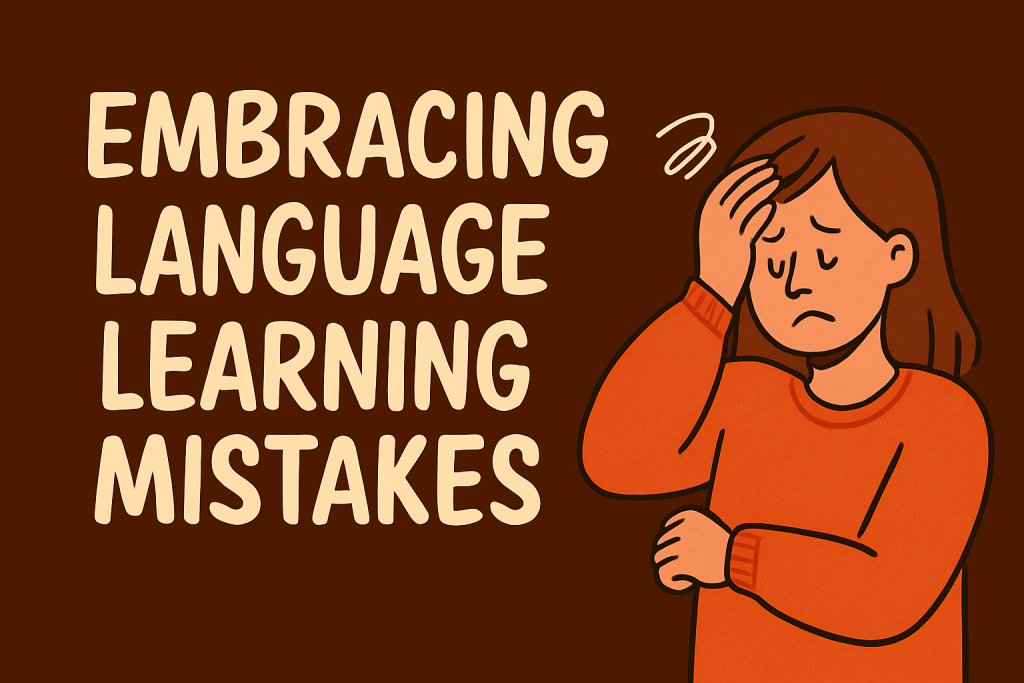
Learning a new language can feel overwhelming, especially when you’re constantly worried about making mistakes or sounding foolish. But what if I told you that feeling like a beginner—and embracing those awkward moments—is actually the secret to becoming fluent faster?
The most successful language learners aren’t those with perfect memory or natural linguistic talent. They’re the ones who understand a fundamental truth: the willingness to make mistakes today creates the master of tomorrow.
The psychology behind effective language learning
When you start learning a foreign language, whether it’s Spanish, French, German, or any other language, your brain is essentially rewiring itself. This neuroplasticity process requires you to step outside your comfort zone repeatedly. Unfortunately, many language learners get stuck because they’re afraid of making mistakes or appearing foolish.
Research in second language acquisition shows that learners who embrace errors and take risks in their language practice achieve fluency significantly faster than those who avoid speaking until they feel “ready.” This phenomenon is known as the willingness to communicate in applied linguistics.
Why perfectionism kills language progress
Perfectionism in language learning creates a vicious cycle:
- You avoid speaking because you’re afraid of mistakes
- Without practice, you don’t improve
- Lack of improvement reinforces your fear of making mistakes
- The cycle continues, keeping you stuck at a beginner level
The most effective language learners break this cycle by accepting that temporary foolishness is the price of long-term mastery.
The courage to be a language beginner
Every fluent speaker once stood exactly where you are now. They’ve all experienced:
- Struggling with pronunciation and feeling embarrassed
- Searching for words in the middle of conversations
- Making grammar mistakes that changed the meaning entirely
- Feeling completely out of their depth in social situations
The difference between those who achieve fluency and those who remain stuck isn’t talent—it’s courage. The courage to sound like a child while learning to speak like an adult.
What “foolishness” looks like in language learning
Embracing your beginner status means being willing to:
- Make pronunciation mistakes: Your accent will be terrible at first, and that’s completely normal
- Use incorrect grammar: You’ll mix up verb tenses, genders, and sentence structures
- Speak with limited vocabulary: You’ll use simple words when you want to express complex ideas
- Feel awkward in conversations: You’ll pause, stumble, and sometimes not understand responses
- Press the “AGAIN” button on your Anki flashcards: When you can’t remember a word or phrase, hitting “AGAIN” isn’t a sign of failure—it’s intelligent learning in action
Each of these experiences isn’t a failure—it’s evidence that you’re actively learning and improving.
The “AGAIN” button: your secret weapon for faster learning
One of the most powerful examples of productive “foolishness” happens every time you use Anki flashcards and encounter a card you don’t know. That moment when you realize you’ve forgotten a vocabulary word, mispronounced a phrase, or confused a grammar rule—and you press the “AGAIN” button—is actually cause for celebration.
Here’s why: Anki’s spaced repetition algorithm uses your “failures” as data to optimize your learning. When you press “AGAIN”:
- The system identifies this as information you need more practice with
- The card will appear more frequently until you master it
- Your brain gets multiple chances to strengthen that neural pathway
- You’re practicing exactly what you need most, not wasting time on what you already know
This means every time you feel “foolish” for forgetting something in your flashcard practice, you’re actually triggering a more personalized, efficient learning experience. The cards you get wrong become your priority—and that’s exactly what accelerates your progress toward fluency.
How humility accelerates language acquisition
When you embrace feeling like a beginner, remarkable things happen to your language learning process:
1. Increased practice frequency
Without the pressure of perfection, you’re more likely to practice regularly. You’ll use your Anki flashcards more consistently, engage in conversations more often, and seek out learning opportunities instead of avoiding them.
2. Reduced anxiety and increased confidence
Paradoxically, accepting that you’ll make mistakes reduces performance anxiety. When you’re not worried about being perfect, you can focus on communication rather than accuracy, which naturally leads to better results.
3. Faster error correction
When you’re not defensive about your mistakes, you’re more open to feedback and correction. This accelerates your learning curve significantly.
4. Enhanced memory consolidation
Emotional states affect memory formation. The positive emotions associated with embracing the learning process help consolidate new vocabulary, grammar rules, and pronunciation patterns more effectively.
The neuroscience of language learning mistakes
Recent neuroscience research reveals fascinating insights about how our brains process language learning errors. When we make a mistake and recognize it, our brain releases dopamine—the same neurotransmitter associated with pleasure and reward. This chemical response actually strengthens the neural pathways associated with the correct information.
This means that making mistakes isn’t just inevitable in language learning—it’s actually beneficial for your brain’s ability to acquire and retain new language information.
Practical strategies for embracing the learning process
1. Reframe your relationship with errors
Instead of seeing mistakes as failures, view them as data points. Each error provides valuable information about what you need to practice more. This mindset shift transforms frustration into curiosity.
2. Set “mistake goals”
Challenge yourself to make a certain number of mistakes each day. This might sound counterintuitive, but setting mistake goals encourages you to take risks and practice more actively.
3. Practice the “beginner’s mind”
Approach each learning session with curiosity rather than judgment. Ask questions, experiment with new structures, and remain open to correction.
4. Use spaced repetition effectively
Tools like Anki flashcards are particularly effective because they present information just before you’re likely to forget it. This creates controlled “failure” situations that strengthen memory retention. Whether you’re using pronunciation flashcards, vocabulary flashcards, or grammar flashcards, the key is consistent practice and acceptance of the learning curve.
The role of effective study tools in embracing mistakes
Quality language learning tools can help you embrace the learning process by providing structured, safe environments for making and learning from mistakes. Speakada’s Anki flashcards are designed with this philosophy in mind, offering:
- Pronunciation practice that lets you hear correct pronunciation and practice without judgment
- Vocabulary building through spaced repetition that expects and accommodates errors
- Grammar exercises that provide immediate feedback in a low-pressure environment
These tools create opportunities for controlled failure—the kind that accelerates learning rather than discouraging it.
Building confidence through strategic vulnerability
The most confident language speakers aren’t those who never make mistakes—they’re those who have made thousands of mistakes and learned from each one. This confidence comes from:
Progressive skill building
Starting with basic conversations and gradually increasing complexity allows you to build confidence while still challenging yourself. Each level of “foolishness” prepares you for the next stage of learning.
Community and support
Finding language learning communities where mistakes are normalized and celebrated can provide the emotional support needed to take risks. Whether it’s online forums, language exchange partners, or study groups, surrounding yourself with supportive learners accelerates progress.
Celebrating small wins
Acknowledging progress, even when it comes with mistakes, reinforces positive learning behaviors. Did you successfully order food in a foreign language, even if your pronunciation wasn’t perfect? That’s worth celebrating.
The long-term benefits of embracing beginner status
Language learners who embrace the awkward phase consistently report several long-term benefits:
1. Faster overall progression
By spending less time paralyzed by perfectionism and more time actively practicing, these learners reach conversational fluency faster.
2. Better accent and pronunciation
Counterintuitively, learners who aren’t afraid to sound terrible initially often develop better accents than those who avoid speaking until they feel ready.
3. Greater cultural sensitivity
The humility required for language learning often translates to greater cultural awareness and sensitivity when interacting with native speakers.
4. Lifelong learning skills
The mindset of embracing temporary incompetence serves learners well beyond language acquisition, improving their ability to learn new skills throughout life.
Creating your personal learning environment
To successfully embrace the learning process, create an environment that supports risk-taking and growth:
Physical environment
Set up a dedicated space for language practice where you feel comfortable making mistakes. This might be a quiet corner of your home or a specific location where you review your flashcards.
Digital tools
Use language learning apps and tools that provide immediate feedback without judgment. Anki flashcards are particularly effective because they adapt to your learning pace and allow you to practice privately.
Social environment
Surround yourself with supportive language learners and native speakers who understand the learning process. Avoid highly critical environments that might discourage risk-taking.
Advanced strategies for intermediate learners
Even as you progress beyond beginner status, maintaining a willingness to feel foolish remains crucial:
Tackling advanced grammar
Complex grammatical structures require the same willingness to make mistakes that basic vocabulary did. Don’t let intermediate-level pride prevent you from making advanced-level errors.
Cultural context learning
Understanding cultural nuances often requires making social mistakes. Embrace these learning opportunities rather than avoiding culturally complex situations.
Professional language use
Using your target language in professional settings requires accepting that you might not sound as polished as you do in your native language—at least initially.
The compound effect of consistent practice
Small, consistent actions compound over time to create remarkable results. In language learning, this means:
- Daily flashcard practice builds vocabulary incrementally
- Regular conversation practice improves fluency gradually
- Consistent listening practice enhances comprehension progressively
The key is maintaining consistency even when—especially when—you feel like you’re not making rapid progress.
Measuring progress beyond perfection
Traditional measures of language progress often focus on accuracy, but effective learners track different metrics:
Communication success
Can you express your ideas, even if imperfectly? Can you understand the general meaning of conversations? These functional measures matter more than grammatical perfection.
Comfort with ambiguity
How comfortable are you with not understanding everything? This psychological measure often predicts long-term success better than vocabulary size.
Risk-taking frequency
How often do you attempt new structures or engage in challenging conversations? This behavioral measure indicates your willingness to continue growing.
Ready to embrace your language learning journey?
The path to fluency isn’t about avoiding mistakes—it’s about making them productively and learning from each one. Every moment of uncertainty, every mispronounced word, every grammatical error is actually a step toward mastery.
Remember: the willingness to be temporarily foolish is what creates long-term wisdom in language learning.
Want more strategies for effective language learning? Subscribe to SPEAKADA WEEKLY newsletter and get expert tips, proven techniques, and motivational insights delivered straight to your inbox. Join thousands of successful language learners who use these strategies to accelerate their progress and maintain motivation throughout their learning journey.
Whether you’re just starting with basic vocabulary or advancing to complex grammar structures, embracing the learning process—mistakes and all—is your key to eventual mastery. The journey from beginner to fluent speaker requires courage, patience, and the wisdom to know that today’s struggles are tomorrow’s strengths.
Start embracing your language learning journey today. Your future fluent self will thank you for having the courage to begin and the wisdom to persist through every awkward, imperfect, beautifully human step along the way.
Ready to accelerate your language learning with proven flashcard techniques? Explore Speakada’s comprehensive collection of pronunciation, vocabulary, and grammar flashcards designed to make your learning journey more effective and enjoyable.

Make Flashcards Online to Learn Spanish Now One of the biggest challenges when learning Spanish is figuring out how to Read more

Most language learners aim for 10 Anki cards per day — but is that right for you? Discover the 3 Read more
Cloze Deletion Anki Guide - My Experience and What I Use Now In this article, I'm going to be talking Read more
Grammatical Gender and How to Learn Gender Nouns With Anki Recently we were asked a question about the use of Read more