
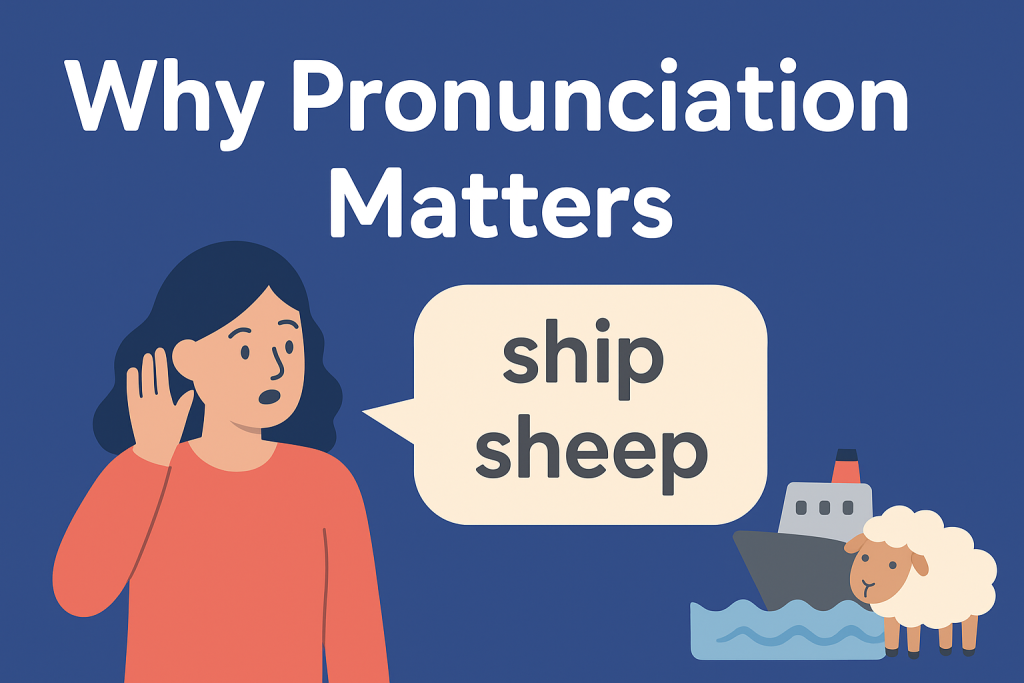
When most people think about language learning, they often focus on memorizing vocabulary lists or mastering complex grammar rules. However, there’s one crucial element that many learners overlook—and it might be the most important factor in effective communication: pronunciation.
Recent studies in applied linguistics reveal a surprising truth: pronunciation errors can have a far greater impact on communication breakdown than minor grammar or vocabulary mistakes. In fact, research shows that native speakers are more tolerant of grammatical errors than pronunciation issues when it comes to understanding non-native speakers.
The Hidden Power of Pronunciation in Language Learning
Pronunciation isn’t just about “sounding native”—it’s about being understood. When you mispronounce even a single sound in your target language, you risk changing the entire meaning of what you’re trying to communicate. This phenomenon occurs across all languages, making pronunciation practice an essential component of any effective language learning strategy.
Think about how frustrating it must be to have perfect grammar and extensive vocabulary, yet struggle to be understood by native speakers simply because of pronunciation issues. This is why incorporating pronunciation training through tools like Anki flashcards can dramatically improve your communication skills and boost your confidence when speaking.
How Small Pronunciation Changes Create Big Meaning Differences
Let’s explore some concrete examples that demonstrate just how critical accurate pronunciation can be across different languages:
English Pronunciation Examples
In English, minimal pairs like “bat” and “bet” showcase how a single vowel sound can completely alter meaning. One refers to sports equipment used in baseball, while the other describes a wager or gamble. For language learners, mastering these subtle differences through consistent pronunciation practice is crucial for clear communication.
Spanish Pronunciation Challenges
Spanish learners often struggle with words like “casa” (house) and “caza” (hunt). The difference lies in the pronunciation of the consonant—the soft ‘s’ sound versus the harder ‘z’ sound. Without proper pronunciation training, Spanish learners might accidentally talk about hunting when they meant to discuss housing, leading to amusing but potentially confusing conversations.
French Pronunciation Nuances
French pronunciation presents unique challenges with words like “pêche” (peach) and “péché” (sin). The subtle difference in accent marks affects pronunciation and completely changes the word’s meaning. French language learners using Anki flashcards for pronunciation practice can systematically work through these tricky pairs to avoid embarrassing mix-ups.
Italian Pronunciation Precision
In Italian, “pasta” and “basta” (enough) differ only in their initial consonant sound. Imagine the confusion at an Italian restaurant if you accidentally tell the waiter “enough” when you meant to order pasta! This example perfectly illustrates why pronunciation practice should be a priority for Italian language learners.
German Pronunciation Complexities
German offers another compelling example with “ziehen” (to pull) and “Zehen” (toes). While these words may look similar to beginner German learners, their pronunciation differs significantly. Mastering such distinctions through spaced repetition systems like Anki can prevent awkward misunderstandings.
A Practical Pronunciation Practice Exercise
Ready to improve your pronunciation skills immediately? Here’s a scientifically-backed exercise that you can start using today:
Step 1: Choose Your Minimal Pairs
Select two similar-sounding words in your target language that have different meanings. Focus on languages you’re actively studying—whether that’s Spanish, French, Italian, German, English, Dutch, or Polish.
Step 2: Listen and Learn
Use online pronunciation resources, language learning apps, or native speaker recordings to hear each word pronounced correctly. Pay close attention to the subtle differences in sounds, stress patterns, and intonation.
Step 3: Practice Active Repetition
Say each word aloud multiple times, focusing specifically on the sounds that differentiate them. This active practice is more effective than passive listening and helps build muscle memory for correct pronunciation.
Step 4: Record and Review
Use your smartphone to record yourself pronouncing both words. Play back the recording and compare it to native speaker pronunciation. This self-assessment technique helps identify areas that need improvement and tracks your progress over time.
The Science Behind Pronunciation and Communication
Research in psycholinguistics demonstrates that our brains process pronunciation errors differently than grammatical mistakes. When we encounter unexpected sounds, our cognitive processing slows down as we try to decode the intended meaning. This processing delay can disrupt natural conversation flow and create communication barriers.
Furthermore, studies show that consistent pronunciation practice using spaced repetition methods—like those employed in Anki flashcards—can significantly improve both pronunciation accuracy and long-term retention. The key is regular, focused practice rather than sporadic intensive sessions.
How Anki Flashcards Revolutionize Pronunciation Learning
Traditional pronunciation practice often lacks systematic structure and consistent review schedules. Anki flashcards solve this problem by implementing spaced repetition algorithms that ensure optimal timing for pronunciation practice sessions.
Here’s how Anki flashcards enhance pronunciation learning:
Systematic Approach
Anki pronunciation flashcards break down complex pronunciation challenges into manageable, bite-sized learning segments. Whether you’re working on alphabet sounds, International Phonetic Alphabet (IPA) symbols, or minimal pairs, the systematic approach ensures comprehensive coverage.
Consistent Practice Schedule
The spaced repetition system automatically schedules pronunciation practice sessions based on your performance, ensuring that challenging sounds receive more frequent review while mastered pronunciations are reinforced at optimal intervals.
Multi-Modal Learning
Quality pronunciation flashcards incorporate audio recordings, visual representations (like IPA symbols), and written examples to engage multiple learning pathways simultaneously. This multi-modal approach accelerates pronunciation acquisition and improves retention.
Progress Tracking
Anki’s built-in analytics help you monitor your pronunciation improvement over time, identifying persistent problem areas and celebrating achieved milestones.
Beyond Individual Sounds: Prosody and Rhythm
While individual sound pronunciation is crucial, effective communication also depends on prosody—the rhythm, stress, and intonation patterns of your target language. Each language has unique prosodic characteristics that contribute to natural-sounding speech.
For example, Spanish typically maintains more consistent syllable timing, while English uses stress-timed rhythm. German often places stress on the first syllable of words, while French tends toward final syllable stress. Understanding and practicing these patterns through structured exercises can dramatically improve your overall pronunciation and make you sound more natural to native speakers.
Building Pronunciation Confidence Through Daily Practice
Confidence plays a crucial role in pronunciation improvement. Many language learners avoid speaking practice due to fear of making pronunciation errors, creating a counterproductive cycle. The solution lies in structured, low-pressure practice opportunities that gradually build confidence.
Daily pronunciation practice sessions using Anki flashcards provide a safe environment for experimentation and improvement. Start with just 10-15 minutes per day, focusing on problematic sounds or word pairs. As your confidence grows, you can expand your practice sessions and tackle more challenging pronunciation elements.
The Connection Between Pronunciation and Listening Skills
Interestingly, improving your pronunciation also enhances your listening comprehension abilities. When you can produce sounds correctly, your brain becomes more attuned to recognizing those same sounds in native speaker speech. This bidirectional relationship means that pronunciation practice delivers double benefits for language learners.
Research supports this connection, showing that learners who engage in regular pronunciation practice demonstrate improved performance in listening comprehension tests compared to those who focus solely on passive listening activities.
Creating Your Personal Pronunciation Learning Plan
Developing an effective pronunciation learning strategy requires personalized approach based on your target language, current skill level, and specific challenges. Here’s a framework for creating your own pronunciation improvement plan:
Assessment Phase
Begin by identifying your most problematic pronunciation areas. Record yourself reading a passage in your target language and compare it to native speaker versions. Note specific sounds, words, or patterns that need attention.
Resource Selection
Choose high-quality pronunciation resources that align with your learning style. Anki flashcards offer structured, systematic practice, while online pronunciation tools provide additional feedback and analysis.
Practice Schedule
Establish a consistent daily practice routine. Even 15-20 minutes of focused pronunciation work can yield significant improvements over time. Consistency matters more than duration.
Progress Monitoring
Regularly assess your improvement through self-recording, native speaker feedback, or pronunciation assessment tools. Celebrate progress and adjust your focus areas as needed.
Common Pronunciation Pitfalls to Avoid
Many language learners fall into predictable pronunciation traps that can hinder their progress. Being aware of these common mistakes helps you avoid them:
Over-Reliance on Spelling
Many learners attempt to pronounce words based on their spelling, which can be misleading in languages with complex sound-spelling relationships. Focus on audio input rather than visual cues when learning pronunciation.
Perfectionism Paralysis
Striving for perfect native-like pronunciation can become counterproductive if it prevents you from speaking practice. Aim for clear, understandable pronunciation rather than perfection.
Neglecting Rhythm and Stress
Focusing exclusively on individual sounds while ignoring word stress and sentence rhythm can result in technically accurate but unnatural-sounding speech.
Inconsistent Practice
Sporadic intensive practice sessions are less effective than regular, shorter practice periods. Consistent daily practice yields better long-term results.
The Role of Technology in Modern Pronunciation Learning
Modern technology has revolutionized pronunciation learning, offering tools and resources that were unavailable to previous generations of language learners. From speech recognition software that provides instant feedback to AI-powered pronunciation assessment tools, technology can accelerate your pronunciation improvement journey.
Anki flashcards represent one of the most effective technological solutions for systematic pronunciation practice. By combining spaced repetition algorithms with multimedia content, Anki creates an optimal learning environment for pronunciation skill development.
Motivation and Long-Term Success in Pronunciation Learning
Maintaining motivation throughout your pronunciation learning journey requires understanding that improvement happens gradually. Unlike vocabulary acquisition, where you can quickly memorize new words, pronunciation refinement requires patient, consistent practice over extended periods.
Set realistic expectations and celebrate small victories. Recording yourself monthly and comparing to earlier recordings can provide tangible evidence of your progress, helping maintain motivation during challenging periods.
Join Our Community of Smart Language Learners
Pronunciation improvement is just one aspect of effective language learning. If you’ve found these pronunciation tips helpful, you’ll love the comprehensive language learning strategies we share in our weekly newsletter. Subscribe to SPEAKADA WEEKLY to receive more free tips, techniques, and resources for mastering languages efficiently using Anki flashcards and other proven methods.
Our newsletter covers vocabulary acquisition strategies, grammar learning techniques, pronunciation practice methods, and comprehensive study plans designed to take you from beginner to fluent speaker. Join thousands of language learners who are already using these smart learning strategies to achieve their language goals faster and more effectively.
Conclusion: Your Pronunciation Journey Starts Now
Pronunciation truly matters more than most language learners realize. It’s the bridge between knowing a language and being understood in that language. By incorporating systematic pronunciation practice into your daily routine—whether through Anki flashcards, regular speaking practice, or structured exercises—you’re investing in more effective communication and greater confidence in your target language.
Remember, every native speaker had to learn pronunciation too. With consistent practice, patience, and the right resources, you can develop clear, understandable pronunciation that serves you well in real-world communication situations.
Start today with the simple exercise outlined in this article. Choose two similar-sounding words in your target language, practice the differences, and begin building the pronunciation skills that will transform your language learning journey.
Your future self—and the native speakers you’ll confidently communicate with—will thank you for making pronunciation a priority in your language learning adventure.
If you've ever struggled to pronounce words correctly in your target language or felt frustrated when native speakers couldn't understand Read more
If you've ever wondered why your language learning flashcards seem to be missing certain letters or sounds, you're not alone. Read more
One of the most common questions we hear from language learners exploring Anki Language Learning Flashcards is whether they need Read more
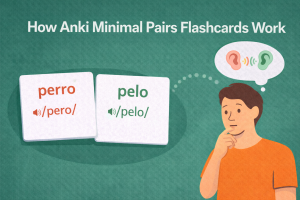
If you have ever opened a Minimal Pairs deck in Anki and thought, "Wait, am I doing this right?" — Read more