
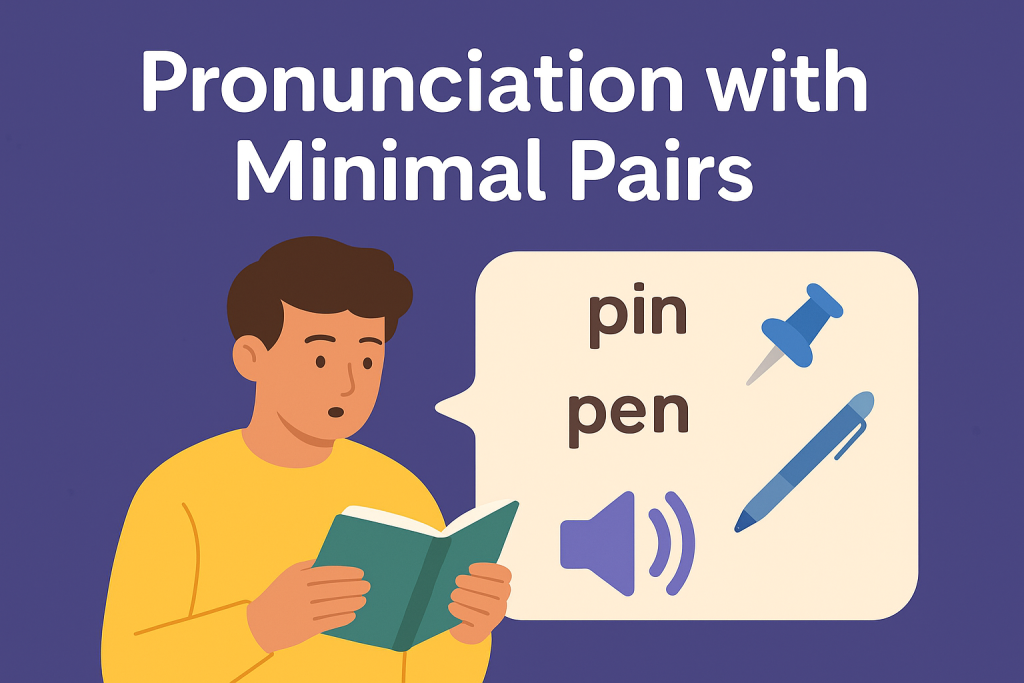
If you’ve ever struggled to pronounce words correctly in your target language or felt frustrated when native speakers couldn’t understand you, you’re not alone. Pronunciation is one of the most challenging aspects of language learning, but there’s a powerful technique that can dramatically improve your accent and speaking confidence: minimal pairs practice.
This simple yet effective method has helped thousands of language learners worldwide achieve native-like pronunciation in Spanish, French, German, Italian, English, Dutch, and Polish. Whether you’re a complete beginner or an advanced learner looking to polish your accent, minimal pairs training can be the game-changer you’ve been searching for.
What Are Minimal Pairs and Why Do They Matter?
Minimal pairs are pairs of words that sound nearly identical but differ by only one sound. Think of English words like “ship” and “sheep” or “pat” and “bat.” These subtle sound distinctions might seem minor, but they’re crucial for clear communication and native-like pronunciation.
When you focus on minimal pairs in your language learning practice, you’re training both your ear and your mouth to distinguish and produce sounds that may not exist in your native language. This targeted approach helps you develop the precise muscle memory and auditory discrimination needed for accurate pronunciation.
The Science Behind Minimal Pairs Training
Research in phonetics and second language acquisition shows that minimal pairs practice activates the same neural pathways that native speakers use to process speech sounds. By repeatedly exposing yourself to these sound contrasts, you’re essentially rewiring your brain to recognize and produce foreign language sounds more accurately.
This technique is particularly effective because it:
- Isolates specific problem sounds
- Provides immediate feedback through contrast
- Builds phonemic awareness gradually
- Transfers to natural speech patterns
Language-Specific Minimal Pairs Examples
Let’s explore how minimal pairs work across different languages. Each language presents unique pronunciation challenges, and understanding these patterns can accelerate your learning process.
American and British English Minimal Pairs
English learners often struggle with vowel distinctions and consonant variations between American and British accents.
American English challenges:
- Ship vs. Sheep (short /ɪ/ vs. long /iː/)
- Pat vs. Bat (voiceless /p/ vs. voiced /b/)
- Think vs. Sink (θ sound vs. s sound)
British English variations:
- Caught vs. Cot (rounded vs. unrounded vowels)
- Pen vs. Pan (different vowel positions)
- Bath vs. Bat (long vs. short ‘a’ sounds)
Spanish Pronunciation Perfection
Spanish minimal pairs help learners master the rolled R, distinguish between similar vowels, and perfect consonant pronunciation.
Essential Spanish minimal pairs:
- Pero (but) vs. Perro (dog) – single vs. double R
- Casa (house) vs. Caza (hunt) – /s/ vs. /θ/ sounds
- Gato (cat) vs. Hato (herd) – hard vs. soft consonants
These examples highlight common pronunciation errors that can completely change word meanings in Spanish conversations.
French Phonetic Precision
French pronunciation requires mastering nasal sounds, liaison, and vowel distinctions that don’t exist in many other languages.
Critical French minimal pairs:
- Beau (handsome) vs. Peau (skin) – /b/ vs. /p/ distinction
- Paix (peace) vs. Pair (pair) – nasal vs. oral vowels
- Rue (street) vs. Roue (wheel) – front vs. back rounded vowels
German Accent Accuracy
German learners benefit from minimal pairs practice to master umlauts, consonant clusters, and vowel length distinctions.
Important German minimal pairs:
- Bett (bed) vs. Bitt (request) – vowel quality differences
- Weiß (white) vs. Beiß (bite) – diphthong variations
- Rat (advice) vs. Rad (wheel) – final consonant voicing
Italian Intonation Improvement
Italian pronunciation focuses on double consonants, vowel purity, and rhythm patterns.
Key Italian minimal pairs:
- Pena (penalty) vs. Pinna (fin) – single vs. double consonants
- Casa (house) vs. Cassa (cash register) – consonant length
- Vino (wine) vs. Pino (pine) – initial consonant distinction
Polish Pronunciation Practice
Polish presents unique challenges with consonant clusters and vowel distinctions.
Essential Polish minimal pairs:
- Lis (fox) vs. List (letter) – vowel length and quality
- Pić (to drink) vs. Bić (to beat) – voicing distinction
- Kolej (train) vs. Kolega (colleague) – similar but distinct words
Dutch Diction Development
Dutch learners need to master vowel systems and consonant combinations unique to the language.
Important Dutch minimal pairs:
- Bij (bee) vs. Pij (pain) – consonant voicing
- Dak (roof) vs. Tak (branch) – initial consonant distinction
- Doek (cloth) vs. Duk (pope) – vowel differences
How to Practice Minimal Pairs Effectively
Traditional Methods
Listen and Repeat Exercises: Start by listening to minimal pair recordings multiple times. Focus on hearing the difference before attempting to produce the sounds yourself.
Recording Yourself: Use your smartphone to record yourself saying minimal pairs. Compare your pronunciation to native speaker models and adjust accordingly.
Mirror Practice: Watch your mouth movements in a mirror while practicing minimal pairs. Visual feedback helps you understand the physical differences between sounds.
Modern Technology Solutions
Anki Flashcards for Pronunciation: Digital flashcards have revolutionized pronunciation practice. You can create custom minimal pairs decks or use professionally designed sets that include audio recordings, phonetic transcriptions, and spaced repetition algorithms.
Speech Recognition Apps: Many language learning apps now include speech recognition features that can provide immediate feedback on your pronunciation accuracy.
Online Pronunciation Tools: Websites and apps dedicated to pronunciation training often include minimal pairs exercises with instant feedback and progress tracking.
Creating Your Minimal Pairs Study Plan
Step 1: Identify Your Problem Sounds
Begin by recording yourself reading a passage in your target language. Listen for sounds that don’t match native pronunciation and create a list of problematic phonemes.
Step 2: Find Relevant Minimal Pairs
Research minimal pairs that target your specific pronunciation challenges. Focus on 5-10 pairs initially rather than overwhelming yourself with too many examples.
Step 3: Establish a Practice Routine
Dedicate 10-15 minutes daily to minimal pairs practice. Consistency is more important than duration when building pronunciation skills.
Step 4: Use Spaced Repetition
Implement spaced repetition techniques to ensure long-term retention. Anki flashcards are particularly effective for this purpose, automatically scheduling review sessions based on your performance.
Step 5: Apply to Real Conversations
Once you’ve mastered isolated minimal pairs, practice using them in sentences and conversations. This helps transfer your improved pronunciation to natural speech.
Advanced Minimal Pairs Techniques
Phonetic Environment Training
Practice minimal pairs in different phonetic environments – at the beginning, middle, and end of words, and in various syllable structures.
Stress and Intonation Integration
Don’t just focus on individual sounds; practice minimal pairs with different stress patterns and intonation contours to develop more natural-sounding speech.
Speed Variations
Start slowly and gradually increase your speaking speed while maintaining pronunciation accuracy. This builds the muscle memory needed for fluent speech.
Common Mistakes to Avoid
Over-Focusing on Perfection
While accuracy is important, don’t let perfectionism prevent you from communicating. Aim for clear, understandable pronunciation rather than absolutely perfect native-like speech.
Neglecting Listening Skills
Many learners focus only on production but neglect auditory discrimination. Spend equal time listening to and producing minimal pairs.
Practicing in Isolation
Always connect your minimal pairs practice to meaningful communication. Use the words in sentences and conversations to make the practice more relevant and memorable.
Measuring Your Progress
Self-Assessment Techniques
Regular self-recording and comparison to native models helps track improvement over time.
Feedback from Native Speakers
Seek feedback from native speakers through language exchange programs or online tutoring platforms.
Speech Analysis Tools
Use apps and software that provide detailed analysis of your pronunciation, including pitch contours and spectrograms.
The Psychology of Pronunciation Improvement
Building Confidence
Successful minimal pairs practice builds confidence in your speaking abilities. As you master difficult sound distinctions, you’ll feel more comfortable engaging in conversations.
Overcoming Fossilization
Adult language learners often develop fossilized pronunciation errors. Minimal pairs practice can help break these ingrained patterns and establish new, more accurate speech habits.
Cultural Integration
Improved pronunciation helps you feel more integrated into the target language culture and can lead to better social and professional opportunities.
Integrating Minimal Pairs with Other Learning Methods
Vocabulary Building
Use minimal pairs to expand your vocabulary while improving pronunciation. Many minimal pairs introduce you to new words naturally.
Grammar Practice
Incorporate minimal pairs into grammar exercises to simultaneously work on sentence structure and pronunciation.
Cultural Context
Learn about the cultural significance of pronunciation differences. In some cultures, pronunciation accuracy is more crucial for social acceptance than in others.
Technology Tools for Minimal Pairs Practice
Anki Flashcard Systems
Anki’s spaced repetition algorithm makes it ideal for pronunciation practice. You can create custom decks with audio files, images, and phonetic transcriptions.
Mobile Apps
Numerous mobile applications specialize in pronunciation training, offering features like speech recognition, progress tracking, and gamified learning experiences.
Online Resources
Websites dedicated to language learning often provide extensive minimal pairs databases, organized by language and difficulty level.
Ready to Transform Your Pronunciation?
Mastering pronunciation through minimal pairs practice requires dedication, consistency, and the right tools. While the technique is simple in concept, the results can be truly transformative for your language learning journey.
Whether you’re struggling with Spanish rolled Rs, French nasal sounds, or German umlauts, minimal pairs training provides a systematic approach to overcome these challenges. The key is to start with sounds that are most problematic for you and gradually expand your practice to include more subtle distinctions.
Want to accelerate your pronunciation improvement journey? Subscribe to the SPEAKADA WEEKLY newsletter to receive expert tips, curated minimal pairs exercises, and proven strategies for mastering pronunciation with Anki flashcards. Our newsletter delivers practical advice directly to your inbox, helping you stay motivated and on track with your language learning goals.
Don’t let pronunciation challenges hold you back from achieving fluency. With consistent minimal pairs practice and the right resources, you can develop the clear, confident pronunciation that opens doors to better communication, cultural understanding, and professional opportunities.
Start your pronunciation transformation today, and discover how this simple technique can make you sound more like a native speaker in your target language. Your future self will thank you for taking this crucial step toward linguistic mastery.
Ready to dive deeper into pronunciation mastery? Explore Speakada’s comprehensive collection of pronunciation flashcards, featuring minimal pairs, IPA training, and alphabet practice for Spanish, French, Italian, German, English, Dutch, and Polish. Visit our Pronunciation Flashcards page to discover how Anki flashcards can accelerate your pronunciation improvement journey.
When most people think about language learning, they often focus on memorizing vocabulary lists or mastering complex grammar rules. However, Read more
If you've ever wondered why your language learning flashcards seem to be missing certain letters or sounds, you're not alone. Read more

One of the most common questions we hear from language learners exploring Anki Language Learning Flashcards is whether they need Read more
If you have ever opened a Minimal Pairs deck in Anki and thought, "Wait, am I doing this right?" — Read more