
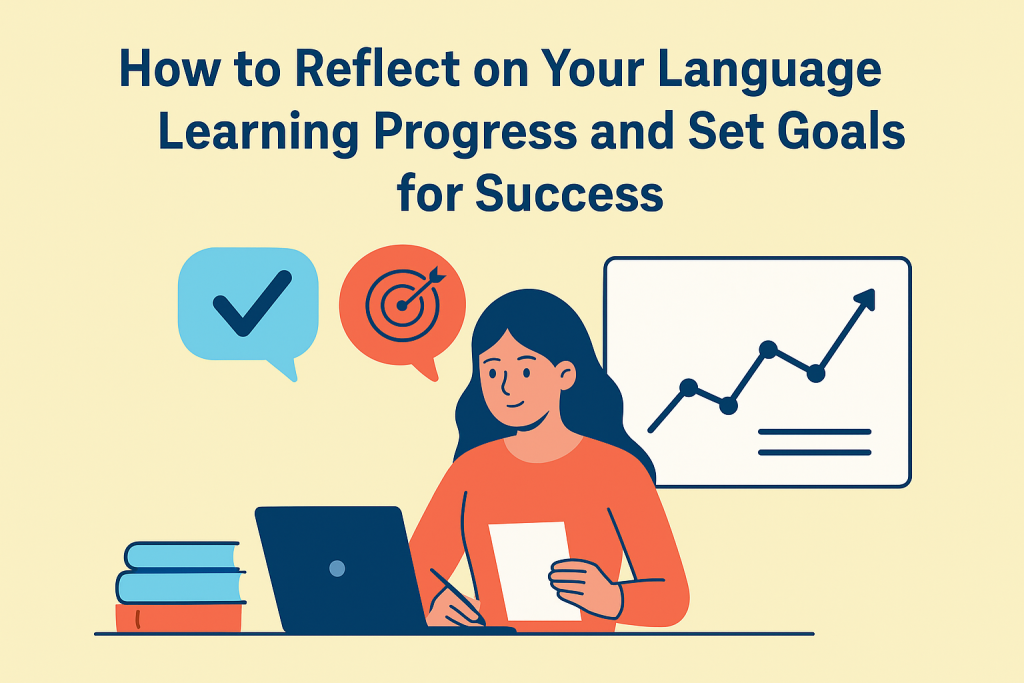
Learning a new language is one of the most rewarding journeys you can embark on, but it’s easy to lose sight of how far you’ve come when you’re focused on daily practice and progress. Taking time to reflect on your language learning achievements—no matter how big or small—can provide the motivation and clarity you need to continue growing and set meaningful goals for the future.
Whether you’ve been using Anki flashcards to master Spanish vocabulary, perfecting your French pronunciation, or conquering German grammar rules, regular reflection is a powerful tool that can accelerate your language learning success. In this comprehensive guide, we’ll explore effective strategies for reviewing your progress and creating a focused plan to reach new linguistic heights.
Why Reflecting on Language Learning Progress Matters
Language learning is a marathon, not a sprint. Without regular check-ins, it’s easy to feel stuck or discouraged, even when you’re making steady progress. Reflection on language learning progress serves several important purposes:
- Motivation boost: Seeing how far you’ve come can reignite your passion for learning
- Identifying patterns: Understanding what methods work best for your learning style
- Goal refinement: Adjusting your approach based on real results and experiences
- Confidence building: Recognizing achievements that might otherwise go unnoticed
Research shows that learners who regularly assess their progress are more likely to maintain long-term motivation and achieve their language learning goals. This is particularly true for those using spaced repetition systems like Anki, where daily practice can sometimes feel routine without visible milestones.
Step 1: Celebrate Your Language Learning Milestones
Tracking Your Achievements
The first step in effective reflection is acknowledging what you’ve accomplished. This includes both major breakthroughs and incremental improvements that compound over time. Consider these areas of progress:
Vocabulary Expansion
- How many new words have you learned and retained?
- Can you now express ideas that were previously impossible?
- Have you moved from basic survival vocabulary to more nuanced expression?
Pronunciation Improvements
- Which sounds that once seemed impossible now feel natural?
- Can native speakers understand you more easily than before?
- Have you mastered challenging phonetic combinations or minimal pairs?
Grammar Mastery
- Which complex grammar rules now make sense?
- Can you construct sentences with greater confidence and accuracy?
- Have you moved beyond basic present tense to more sophisticated structures?
Using Data to Measure Progress
If you’re using Anki flashcards for language learning, your statistics provide concrete evidence of your dedication and progress. Check your Anki stats to see:
- Total cards reviewed over the year
- Current retention rates
- Daily streaks and consistency patterns
- Most challenging and easiest card types
These numbers tell a story of commitment and growth that pure subjective assessment might miss. For Speakada users, this data is particularly valuable as it reflects targeted progress in pronunciation, vocabulary, and grammar through our specialized flashcard decks.
Step 2: Revisit and Conquer Previous Challenges
The Power of Returning to Difficult Material
One of the most satisfying aspects of language learning reflection is revisiting material that once seemed impossible. This exercise serves multiple purposes:
- Confidence building: Seeing how “easy” previously difficult content now seems
- Gap identification: Spotting areas that still need attention
- Retention testing: Ensuring long-term memory consolidation
Targeted Review Strategies
Pronunciation Practice Return to those tricky sounds and minimal pairs that challenged you months ago. For example:
- Spanish learners: Practice rolling R’s or distinguishing between “pero” and “perro”
- French learners: Work on nasal vowels or the subtle differences between “tu” and “tout”
- German learners: Master umlauts and consonant clusters like in “Bier” vs. “Bär”
- Italian learners: Perfect double consonants and rhythm patterns
Using IPA flashcards can be particularly effective for this targeted pronunciation review, as they provide visual representations of sounds that help cement proper articulation.
Vocabulary Reinforcement Focus on high-frequency words that you learned but may not use regularly. This prevents vocabulary decay and strengthens your active word knowledge. Consider:
- Words you recognize but rarely use in speech
- False friends that still cause confusion
- Academic or professional vocabulary in your target language
- Idiomatic expressions and cultural references
Grammar Consolidation Return to complex grammar points with fresh perspective:
- Subjunctive moods and conditional structures
- Irregular verb conjugations across all tenses
- Complex sentence structures and subordinate clauses
- Gender agreements and case systems (for applicable languages)
Step 3: Design Your Strategic Language Learning Plan
Setting SMART Language Goals
Effective language learning goal setting follows the SMART criteria: Specific, Measurable, Achievable, Relevant, and Time-bound. Instead of vague aspirations like “get better at Spanish,” consider specific objectives such as:
- Vocabulary Goals: “Learn and retain 500 new Spanish business terms by using Speakada’s vocabulary flashcards for 15 minutes daily”
- Pronunciation Goals: “Achieve 90% accuracy on German minimal pairs using flashcards within 3 months”
- Grammar Goals: “Master all French subjunctive forms and use them correctly in conversation”
Choosing Your Priority Focus Area
Rather than trying to improve everything simultaneously, identify which skill area will provide the biggest impact on your overall proficiency:
Prioritize Vocabulary If:
- You often find yourself unable to express ideas due to word limitations
- You understand grammar but lack sufficient vocabulary for fluent communication
- You’re preparing for standardized language tests with vocabulary components
Prioritize Pronunciation If:
- Native speakers frequently misunderstand you
- You lack confidence speaking due to pronunciation concerns
- You want to reduce your accent for professional or personal reasons
Prioritize Grammar If:
- You can communicate but make frequent structural errors
- You’re stuck at an intermediate plateau
- You need formal language skills for academic or professional purposes
Creating Sustainable Practice Routines
The most effective language learning happens through consistent, manageable daily practice. Consider these evidence-based approaches:
Spaced Repetition Optimization If you’re using Anki or similar systems, optimize your practice schedule:
- Review flashcards at the same time each day to build habit strength
- Adjust daily limits based on retention rates and available time
- Mix different card types (pronunciation, vocabulary, grammar) within single sessions
Progressive Difficulty Scaling Structure your learning to gradually increase complexity:
- Start with high-frequency, practical vocabulary
- Introduce grammar concepts in logical progression
- Challenge yourself with authentic materials as proficiency grows
Advanced Strategies for Language Learning Reflection
Monthly Progress Assessments
Implement regular monthly check-ins to maintain momentum and adjust strategies:
- Quantitative Review: Analyze flashcard statistics, completed lessons, and study time
- Qualitative Assessment: Reflect on comfort levels, confidence changes, and enjoyment
- Goal Adjustment: Modify targets based on progress and changing priorities
- Method Evaluation: Assess which study techniques are most effective
Leveraging Technology for Progress Tracking
Modern language learners have access to sophisticated tracking tools:
- Anki statistics for detailed spaced repetition analysis
- Language exchange apps for speaking practice documentation
- Progress journals for subjective experience tracking
- Recording tools for pronunciation improvement evidence
Community and Accountability
Consider joining language learning communities or finding accountability partners. Sharing your reflection process and goals with others can:
- Provide external motivation and encouragement
- Offer different perspectives on challenges and solutions
- Create opportunities for practice and feedback
- Build lasting friendships through shared linguistic journeys
Common Reflection Mistakes to Avoid
Perfectionism Paralysis
Many language learners fall into the trap of focusing solely on what they haven’t accomplished rather than celebrating progress. Remember that language learning is inherently imperfect and iterative. Embrace mistakes as learning opportunities rather than failures.
Comparison Trap
Avoid comparing your progress to other learners, especially on social media. Everyone’s language learning journey is unique, influenced by factors like:
- Prior language experience and aptitude
- Available study time and resources
- Learning goals and motivation levels
- Preferred learning styles and methods
Neglecting Incremental Progress
Small daily improvements often go unnoticed but compound into significant long-term gains. Acknowledge micro-victories like:
- Understanding a previously confusing grammar explanation
- Successfully using a new word in context
- Noticing improved listening comprehension
- Feeling more confident during speaking practice
Creating Your Personal Language Learning Roadmap
Short-term Objectives (1-3 months)
Focus on achievable, specific goals that build momentum:
- Complete a specific number of flashcard reviews
- Master a particular grammar concept
- Learn vocabulary for a specific topic or situation
- Improve pronunciation of challenging sounds
Medium-term Targets (3-12 months)
Set more ambitious goals that require sustained effort:
- Achieve conversational fluency in specific contexts
- Pass language proficiency examinations
- Consume authentic media without translation aids
- Participate in extended conversations with native speakers
Long-term Vision (1+ years)
Maintain motivation with inspiring long-term aspirations:
- Professional proficiency for career advancement
- Cultural immersion and travel experiences
- Academic study in your target language
- Bilingual or multilingual identity development
The Role of Speakada in Your Language Learning Journey
Effective language learning requires high-quality resources and systematic approaches. Speakada’s comprehensive Anki flashcard collections provide structured, research-based tools for all aspects of language acquisition:
Pronunciation Mastery: Our specialized flashcards break down pronunciation into manageable components—alphabet sounds, IPA symbols, and minimal pairs—making it easier to identify and correct specific articulation challenges.
Vocabulary Acquisition: From essential picture words to advanced academic vocabulary, our scientifically-sequenced flashcards ensure you’re learning the most useful words in the most effective order.
Grammar Comprehension: Structured according to CEFR levels from A0 to C1, our grammar flashcards present complex concepts in digestible, progressive formats that build understanding systematically.
By incorporating these resources into your reflection and goal-setting process, you can ensure that your language learning efforts are both efficient and comprehensive.
Your Next Steps: From Reflection to Action
Now that you understand the importance of language learning reflection and have strategies for effective goal setting, it’s time to put these concepts into practice:
- Schedule Regular Reflection Time: Block 30-60 minutes monthly for comprehensive progress review
- Document Your Journey: Keep a language learning journal or digital record
- Set Specific, Measurable Goals: Choose one primary focus area for concentrated improvement
- Implement Daily Practice Routines: Establish consistent, sustainable study habits
- Track and Adjust: Monitor progress and modify strategies based on results
Stay Connected for Continued Success
Language learning is a long-term commitment that benefits from ongoing support, fresh insights, and community connection. To maximize your success and stay motivated throughout your journey, consider subscribing to the SPEAKADA WEEKLY newsletter. Each week, you’ll receive:
- Proven language learning strategies and tips
- Updates on new flashcard collections and resources
- Success stories from fellow language learners
- Exclusive content and early access to new materials
- Personalized advice for common learning challenges
Join thousands of successful language learners who rely on Speakada’s expert guidance to achieve their linguistic goals. Whether you’re just starting your language learning journey or looking to break through advanced plateaus, our weekly insights will help you maintain momentum and continue growing.
Conclusion: Embracing the Journey
Language learning reflection isn’t just about measuring progress—it’s about understanding your unique learning journey and optimizing your approach for continued success. By regularly assessing your achievements, revisiting challenging materials, and setting focused goals, you create a feedback loop that accelerates improvement and maintains motivation.
Remember that every conversation, every flashcard review, and every grammar concept mastered represents meaningful progress toward your larger linguistic goals. Whether you’re using Speakada’s specialized Anki flashcards or other learning resources, the key is consistent reflection, strategic planning, and persistent practice.
Your language learning journey is uniquely yours, filled with personal victories, creative breakthroughs, and expanding cultural understanding. Take time to appreciate how far you’ve come, set inspiring goals for where you’re going, and enjoy every step of this remarkable adventure in human connection and communication.
The path to language mastery isn’t always linear, but with thoughtful reflection and strategic planning, every day brings you closer to your goals. Here’s to your continued growth, discovery, and success in the amazing world of language learning.
Every year, millions of people set ambitious New Year's resolutions, only to abandon them within weeks. Studies consistently show that Read more

Learning a new language often feels like an impossible dream when you're juggling work deadlines, family responsibilities, social commitments, and Read more

In our increasingly connected world, the ability to communicate across linguistic boundaries has never been more valuable. While many people Read more

Can you really master a new language without stepping foot in another country? Absolutely. Here's your roadmap to independent language Read more