
Learning a new language from scratch can feel overwhelming. Where do you start? What should you focus on first? How much time and money will it take to reach conversational fluency?
These are exactly the questions Mike asked when he reached out to us about his French learning journey. As an absolute beginner with about 100 words under his belt, he wanted a clear, efficient path to becoming conversational. His story—and the roadmap we created for him—offers valuable insights for anyone starting their language learning adventure.
Understanding Your Starting Point: The A0 Learner
Mike identified himself as an A0 learner, which means absolute beginner. If you’re wondering where you fall on the proficiency scale, A0 represents someone who knows little to no vocabulary and has minimal exposure to the target language. This is actually the perfect starting point because you can build the right habits from day one.
The beauty of starting from zero is that you have a clean slate. You haven’t developed bad pronunciation habits, you’re not relying on incorrect grammar patterns, and you can structure your learning using proven methods from the beginning.
Why Clear Goals Matter in Language Learning
Mike’s goal was simple and achievable: he wanted to become conversational in French. This is one of the most common and realistic goals for language learners. But what does “conversational” actually mean?
Being conversational typically means you can:
- Understand everyday conversations at a moderate pace
- Express your thoughts and needs clearly
- Navigate common social situations without constant translation
- Understand about 80-90% of daily interactions
Research consistently shows that you don’t need to know tens of thousands of words to achieve this level. In fact, the top 2,000 most frequent words in any language give you access to approximately 90% of everyday conversations. This insight forms the foundation of an efficient learning strategy.
The Three-Step Path to Conversational Fluency
Based on extensive experience helping language learners achieve their goals, here’s the proven roadmap we shared with Mike:
Step 1: Master Pronunciation First
This might surprise you, but pronunciation should come before vocabulary memorization. Why? Because learning the correct sounds of your target language from the beginning prevents you from developing bad habits that are incredibly difficult to fix later.
When you master pronunciation early, you:
- Speak more confidently from day one
- Are understood more easily by native speakers
- Train your ear to distinguish between similar sounds
- Avoid the frustration of being misunderstood
Pronunciation Flashcards provide a systematic way to learn every sound in your target language. Starting with alphabet flashcards helps you understand the building blocks, while IPA (International Phonetic Alphabet) guides show you exactly how each sound is produced. Minimal pairs flashcards then train your ear to distinguish between sounds that are similar but different.
For Mike learning French, this meant starting with the French Pronunciation Bundle, which includes the French Alphabet Flashcards, French IPA Flashcards, and French Minimal Pairs Flashcards.
The same principle applies regardless of which language you’re learning—whether it’s Spanish, German, Italian, Dutch, Polish, or English as a second language.
Step 2: Build Core Vocabulary Strategically
Once you have pronunciation fundamentals in place, it’s time to build vocabulary. But not just any vocabulary—you want to focus on high-frequency words that give you the most conversational power with the least effort.
This is where the 80/20 principle really shines in language learning. Instead of trying to memorize obscure vocabulary you’ll rarely use, focus on the words that appear most frequently in everyday conversations.
The most effective approach uses picture-based flashcards rather than translation-based ones. When you see an image paired with a foreign word, your brain learns to think directly in that language instead of always translating from English. This is a game-changer for fluency.
Vocabulary Flashcards using this image-based method help you build mental associations that stick. For comprehensive coverage, we recommend starting with basic picture vocabulary (around 500 foundational words) before moving to the top 2,000 most common words.
For Mike, this meant working through the French Vocabulary Bundle, which includes French 500 Picture Words Flashcards, French Top 2000 Words Flashcards, and French Common Phrases Flashcards.
Step 3: Leverage Anki’s Spaced Repetition System
Here’s where the magic really happens. Having great content is important, but the delivery system matters just as much. This is why we built our flashcards specifically for Anki, a spaced repetition software that has revolutionized language learning.
How Anki works is beautifully simple: it shows you flashcards right before you’re about to forget them. This “just-in-time” review is the optimal moment for strengthening memories and moving information from short-term to long-term memory.
The software tracks your performance on each card and adjusts the review schedule automatically. Words you struggle with appear more frequently, while words you know well are spaced further apart. This intelligent scheduling means you spend your study time exactly where you need it most.
Best of all, Anki is completely free for computers and Android devices. The only investment is in quality flashcard decks that save you hundreds of hours of card creation.
The Investment: Time and Money
Mike also wanted to know the bottom line cost, which is a fair question. Here’s the honest breakdown:
Software Cost:
- Anki for computers (Windows, Mac, Linux): Free
- Anki for Android: Free
- AnkiMobile for iOS: Paid (but optional—you can sync from computer for free)
Content Investment: For someone aiming to become conversational, the recommended investment includes:
- Pronunciation Bundle — The foundation for correct speech
- Vocabulary Bundle — Core words and phrases for everyday conversation
The exact cost varies by language, but this investment saves you hundreds of hours you’d otherwise spend creating and organizing flashcards yourself. More importantly, professionally designed decks ensure you’re learning the right content in the right order with high-quality audio from native speakers.
When you compare this to traditional language courses that can cost thousands of dollars, or language learning apps that require ongoing monthly subscriptions, Anki language learning flashcards represent exceptional value.
Why This Path Works
This three-step approach isn’t arbitrary—it’s based on decades of research in language acquisition and memory formation. Here’s why it’s so effective:
Pronunciation first ensures you build a solid foundation. Think of it like learning to play an instrument: you need to know how to make the right sounds before you start playing songs.
Strategic vocabulary building focuses your limited study time on the words that matter most. Native speakers don’t use every word in the dictionary regularly, so why should you learn them all at once?
Spaced repetition exploits the science of memory formation. Your brain is designed to forget information that seems unimportant. By reviewing at optimal intervals, you convince your brain this information is worth keeping permanently.
Adapting This Path to Your Language
While Mike was learning French, this same roadmap applies whether you’re studying Anki Spanish Flashcards, Anki German Flashcards, Anki Italian Flashcards, Anki Dutch Flashcards, Anki Polish Flashcards, or even Anki English Flashcards as a second language.
The principle remains the same: pronunciation → core vocabulary → spaced repetition.
Each language has its unique challenges, of course. Spanish pronunciation is relatively straightforward for English speakers, while Polish consonant clusters require more practice. French vowels can be tricky, while German word order takes time to master. But the framework works universally because it’s based on how our brains naturally acquire and retain language.
Beyond Vocabulary: Adding Grammar
You might be wondering: what about grammar? Mike asked this too, and the answer is that grammar becomes much easier once you have pronunciation and core vocabulary established.
When you know 1,000-2,000 words and understand how they sound, grammar patterns start making sense in context. You can recognize how sentences are structured, how verbs change, and how words relate to each other.
Grammar Flashcards work best when you can already understand the example sentences. That’s why we recommend building vocabulary first, then layering in grammar systematically.
For most languages, we offer beginner, intermediate, and advanced grammar decks that correspond to CEFR levels (A0-A2, B1-B2, and C1). This allows you to add grammar study when you’re ready, progressing from basic sentence structures to more complex forms.
Testing the Waters: Start Small
If you’re not ready to commit to full bundles yet, that’s completely understandable. Many learners prefer to test our approach first.
This is why we offer a special $1 trial with our Top 100 Words flashcards. This small deck gives you a genuine feel for how picture-based flashcards work with Anki’s spaced repetition system. You’ll learn 100 high-frequency words and experience firsthand why this method is so effective for building vocabulary that sticks.
It’s a risk-free way to see if this approach matches your learning style before making a larger investment.
Real Results Take Consistent Effort
Here’s the reality: there’s no magic shortcut to learning a language. Mike’s path from zero to conversational will take dedicated daily practice. But with the right tools and strategy, the journey becomes much more efficient and enjoyable.
Most learners find that 15-20 minutes of daily Anki review, combined with regular exposure to the language through reading, listening, or conversation practice, leads to steady, measurable progress. Within a few months of consistent practice, you’ll find yourself understanding more and expressing yourself more confidently.
The key is consistency over intensity. It’s better to study 15 minutes every day than to cram for 2 hours once a week. Spaced repetition only works if you show up regularly.
Your Next Steps
If you’re in a similar position to Mike—starting from scratch or near-beginner level—here’s your action plan:
- Download Anki (free for computer or Android)
- Start with pronunciation in your target language
- Build core vocabulary using picture-based flashcards
- Review daily following Anki’s schedule
- Add grammar once you have 1,000+ words under your belt
Ready to explore Anki Language Learning Flashcards and see how they can accelerate your journey? Whether you’re learning Spanish, French, Italian, German, Dutch, Polish, or English, we have comprehensive decks designed to take you from beginner to conversational efficiently.
Stay Connected for More Learning Tips
Language learning is a journey filled with challenges and breakthroughs. Want to receive more strategies, tips, and insights like this directly in your inbox?
Subscribe to the SPEAKADA WEEKLY newsletter for free expert guidance on mastering languages with Anki flashcards. You’ll get practical advice, learning strategies, and occasional special offers to support your language learning goals. Join thousands of successful language learners who rely on our weekly tips to stay motivated and make consistent progress.
The Bottom Line
Mike’s question was straightforward: “What’s the best path forward, and how much will it cost?” We hope this detailed roadmap answers that question not just for him, but for you too.
The path from zero to conversational doesn’t require expensive courses or years of study. With the right foundation in pronunciation, strategic vocabulary building, and the power of spaced repetition, you can make remarkable progress in a matter of months.
The investment—both in time and money—is modest compared to the lifetime benefit of speaking another language. And unlike subscription-based apps that cost $10-20 per month indefinitely, Anki language flashcards are a one-time purchase that you own forever.
Your language learning journey begins with a single step. Whether you start with a $1 trial deck or commit to a full bundle, the important thing is to start. Every word you learn, every pronunciation you master, every review session you complete brings you closer to the conversational fluency you’re working toward.
What language will you be speaking six months from now? With the right roadmap and consistent effort, the answer might surprise you.
Have questions about your own language learning journey? Want to know which decks are right for your current level? Feel free to reach out—we’re here to help you succeed.
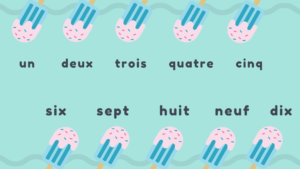
If you are a beginner learning French, learning how to pronounce and use French numbers is a great way to Read more
French Alphabet Pronunciation Guide The best place to start when you are learning French is to learn the French alphabet. Read more
Make Flashcards Online to Learn Spanish Now One of the biggest challenges when learning Spanish is figuring out how to Read more
Most language learners aim for 10 Anki cards per day — but is that right for you? Discover the 3 Read more