
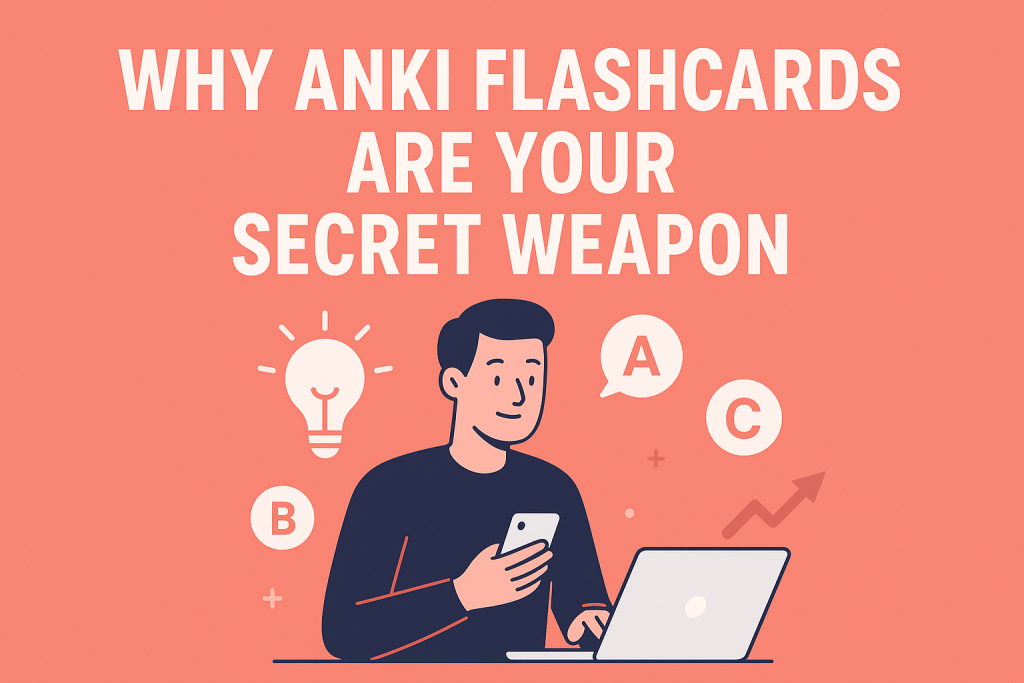
Let’s cut through the noise for a moment.
You know those language learning apps that promise you’ll be fluent in 15 minutes a day? The ones with the shiny testimonials and the celebrity endorsements? Yeah, about that…
They’re selling you a dream. A beautiful, absolutely gorgeous, too-good-to-be-true dream.
Here’s the reality check nobody’s brave enough to give you: Language learning isn’t a sprint. It’s a marathon, and the finish line keeps moving. It’s messy. It’s complicated. It’s multifaceted in ways that make a three-layer cake look simple.
The Brutal Truth About Language Acquisition
When you decide to learn Spanish, French, Italian, German, English, Dutch, or Polish—or literally any language—you’re not just checking off one skill. You’re actually juggling five at once: speaking, listening, reading, writing, and something that ties them all together—comprehension.
And that’s just the appetizer.
Want to dig deeper? Speaking alone is like a Russian nesting doll of complexity. Inside that one skill, you’ve got:
- Pronunciation (so people actually understand you and don’t think you’re ordering a ham sandwich when you’re asking for directions)
- Vocabulary (the actual words you need to say anything useful)
- Grammar (so you don’t sound like a toddler stringing random words together)
- Fluency (making it all flow naturally without sounding like a robot reading a script)
It’s layers upon layers upon layers. Each one demanding attention. Each one essential.
So yeah, let’s be honest about something: no single tool is going to solve language learning alone. Not one. Not yours, not mine, not the fancy app everyone’s raving about.
What Anki Flashcards (And Our Speakada Decks) Actually Can’t Do
Let’s own this right here. Anki language learning flashcards are incredible, but they’re not magical.
Here’s what they won’t do:
- Replace a conversation with a native speaker over coffee – Our Anki Spanish flashcards, French flashcards, German flashcards, or any of our language decks won’t give you the unpredictable, chaotic beauty of real human conversation with all its stumbles, accent variations, and context-dependent meanings.
- Stream hours of authentic native speaker dialogues – You can’t just plop yourself down with a Speakada deck and passively absorb how native speakers chat with each other in real time. That takes dedicated listening practice with other resources.
- Replace active conversation practice – Whether you’re working through our vocabulary flashcards or grammar flashcards, you still need to use that language with real people—tutors, language partners, locals, whoever will listen.
We’re not going to pretend otherwise. That’s not what our flashcards are for.
But Here’s Where They Become Absolutely Essential (And Why You’re Probably Underestimating Them)
Your brain has a feature—let’s call it a “bug” if we want to be dramatic—that’s been wired into human neurology for millennia: it forgets things. Aggressively.
This isn’t a character flaw. It’s not lazy. It’s just how memory works. Your brain is designed to dump information that doesn’t seem immediately relevant to survival. Revolutionary concept from an evolutionary standpoint. Absolutely infuriating when you’re trying to retain 2,000 Spanish vocabulary words.
Here’s the problem: when you’re learning a new language, you’re not talking about retaining a few facts for a quiz. You’re talking about acquiring anywhere from 1,000 to 3,000+ words minimum just to reach basic conversational ability. And if you want to get truly comfortable? You’re looking at 10,000+ individual words across different contexts, conjugations, and meanings.
Your naked brain alone? It will forget 70% of what you learn in three weeks. That’s not a penalty; that’s the default setting. It’s called the forgetting curve, and it’s scientific fact.
This is exactly where spaced repetition enters the chat like the superhero nobody asked for but everyone desperately needs.
The Spaced Repetition Magic That Actually Works
Spaced repetition is the secret sauce that makes Speakada flashcards different from just staring at vocabulary lists or flipping through textbook chapters.
Here’s how it works (simplified version):
You learn a word. You forget it. Anki shows it to you again right before you completely forget it. You learn it again. The intervals get longer and longer. Eventually, that word is so deeply embedded in your brain that you remember it without effort.
It sounds almost too simple. But it’s been proven in educational research across thousands of studies. When you use spaced repetition, your retention rate skyrockets compared to cramming or passive learning.
Think about it: if a tutor could follow you around and quiz you on exactly the information you’re about to forget, right when you’re about to forget it, that would be incredibly expensive and logistically impossible. That’s essentially what Speakada flashcards do automatically.
Our pronunciation flashcards make you hear and practice sounds you’d otherwise fumble. Our top 2000 words vocabulary decks for Spanish, French, Italian, and other languages drill the most commonly used words until they’re automatic. Our grammar flashcards arranged by CEFR level—from A0 through C1—build your ability to construct correct sentences without thinking about it.
All of this is powered by spaced repetition, working silently in the background to prevent that pesky forgetting curve from demolishing your progress.
What Textbooks, Tutors, and Native Materials Do Best
Let’s be clear: these things are invaluable. We’re not suggesting otherwise.
Textbooks teach you grammar systematically. Tutors give you real-time feedback and correction. Native materials—podcasts, TV shows, books, music, news articles—expose you to authentic language the way it’s actually used. Conversation partners challenge you to think on your feet.
All of these are essential pieces of the language learning puzzle. You should be doing them. You absolutely need them if you want to actually communicate.
But here’s the kicker: all of that learning means nothing if you forget it two weeks later.
You can have the world’s greatest tutor explain Spanish grammar patterns perfectly. But if you don’t remember them when you’re trying to speak, what was the point? You can watch every episode of a French TV show. But if you forget 70% of the vocabulary you encountered, you’ll be at the same cliff next time.
Textbooks teach. Native materials expose. Conversation partners challenge. But only spaced repetition ensures you remember what you’ve learned.
The Real Power Move: Stacking Your Learning Resources
Here’s where this gets practical.
You don’t have to choose between Anki flashcards and everything else. You need both. The winning strategy is combining them:
Morning/Evening: Use Speakada Anki flashcards to lock in pronunciation, vocabulary, and grammar. Spend 15-30 minutes. Let spaced repetition do its thing.
Throughout the day: Engage with native materials. Listen to podcasts. Watch TV shows. Read articles. Build that exposure and see how real people use the language.
Weekly: Have conversation practice with tutors or language partners. Use that locked-in foundation to actually communicate and get comfortable.
The result? You’re not relying on your brain’s terrible memory. You’re not just passively consuming without retaining. You’re not stuck repeating the same mistakes in conversation. You’re building a comprehensive, durable skill.
For learners tackling Spanish, French, Italian, German, Dutch, Polish, or English specifically, Speakada offers comprehensive flashcard bundles designed to cover everything from alphabet basics through advanced grammar, so you can build that foundation systematically.
Why This Matters Right Now (And It Always Will)
Language learning isn’t getting simpler. The amount of content available is exploding. The apps are getting flashier. The promises are getting bolder.
But the fundamental challenge hasn’t changed: your brain still forgets things, and you still need to remember thousands of pieces of information to communicate effectively.
Whether you’re learning to communicate with family abroad, preparing for travel, pursuing career advancement, or simply challenging your brain, the path forward is the same. You need exposure (other resources). You need practice (conversation). But you also need retention (spaced repetition with Anki).
This isn’t some hyped-up sales pitch. This is recognizing a genuine gap and filling it. Thousands of language learners have experienced this: months of studying, then frustration because the vocabulary won’t stick. Or worse, achieving some fluency and then losing it because there’s no systematic way to maintain it.
Anki language learning flashcards solve that problem.
Your Next Move
If you’re serious about language learning, here’s the honest recommendation:
- Figure out what you need – Are you starting from zero? Build a foundation with pronunciation flashcards and beginner vocabulary. Already intermediate? Dive into grammar flashcards at your level.
- Build your stack – Get your Anki deck in place. Find your conversation partners. Gather your native materials. Make it a system, not a hobby.
- Commit to consistency – 20-30 minutes a day with spaced repetition beats sporadic cramming. Every single time.
For specific languages—whether that’s Spanish flashcards, French flashcards, Italian flashcards, German flashcards, Dutch flashcards, Polish flashcards, or English flashcards—we’ve built comprehensive decks specifically designed to work with your learning journey.
Stop letting memorization be your weakest link. Stop watching your progress fade because you forgot half of what you learned. Stop pretending that one app or method or resource is going to magically make you fluent without the actual work.
You need more than Anki. Absolutely. But you probably need Anki more than you realize.
Stay In The Loop With Smarter Language Learning Tips
Ready to take your language learning to the next level? Join thousands of learners who are already using strategic Anki methods to accelerate their progress.
Subscribe to the Speakada Weekly newsletter and get:
- Weekly tips for optimizing your Anki study routine
- New vocabulary and grammar patterns delivered directly to your inbox
- Insider strategies from language learning experts
- Exclusive discounts on new flashcard decks
- Real stories from learners who’ve hit major milestones
Language learning is a marathon, not a sprint. But with the right tools and the right strategy, you can cover that distance faster than you ever thought possible. The newsletter keeps you accountable, motivated, and informed.
Get weekly language learning insights delivered to your inbox →
Your future fluent self will thank you.
Additional Resources To Accelerate Your Learning
Ready to explore further? Check out these complementary resources designed to supplement your Anki flashcard practice:
- Why Anki is Good for Learning – Discover the science behind spaced repetition
- How Anki Works to Learn a Language Better – Deep dive into the mechanics
The combination of spaced repetition (Anki), structured learning (these resources), and real-world practice is the proven path to language fluency.
Make Flashcards Online to Learn Spanish Now One of the biggest challenges when learning Spanish is figuring out how to Read more
Most language learners aim for 10 Anki cards per day — but is that right for you? Discover the 3 Read more
Cloze Deletion Anki Guide - My Experience and What I Use Now In this article, I'm going to be talking Read more
Grammatical Gender and How to Learn Gender Nouns With Anki Recently we were asked a question about the use of Read more