
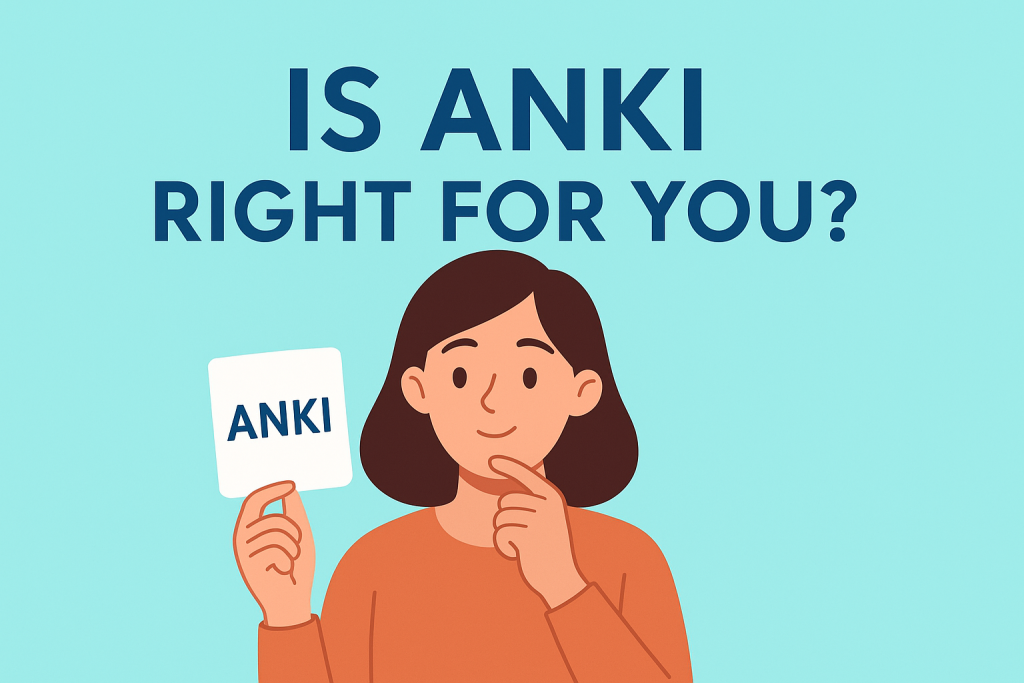
Language learning apps and methods are everywhere these days, each promising to be the ultimate solution for mastering a new language. But here’s the truth that most companies won’t tell you: no single language learning method works for everyone.
As language learning specialists who’ve helped thousands of students improve their Spanish, French, Italian, German, English, Dutch, and Polish through Anki flashcards, we’ve learned something important. While Anki-based language learning can deliver exceptional results, it’s crucial to understand whether this systematic approach aligns with your learning style before diving in.
Let’s explore who benefits most from Anki flashcards, who might struggle with this method, and what alternatives exist for different learning preferences.
What Makes Anki Flashcards Different from Other Language Learning Tools?
Anki operates on the principle of spaced repetition system (SRS), a scientifically-proven learning technique that optimizes memory retention. Unlike traditional language learning apps that follow a linear progression, Anki adapts to your individual learning pace, showing you words and concepts just before you’re likely to forget them.
This approach is particularly effective for:
- Vocabulary acquisition and long-term retention
- Pronunciation improvement through audio-based cards
- Grammar pattern recognition through structured examples
- Building strong foundational knowledge before advancing to complex concepts
The key difference lies in Anki’s focus on active recall rather than passive recognition. Instead of simply reading or listening to new words, you actively retrieve information from memory, strengthening neural pathways and improving retention rates significantly.
The Ideal Anki Flashcard Learner: Is This You?
You Have a Systematic Personality
Anki flashcards work exceptionally well for learners who thrive on structure and routine. If you’re someone who:
- Enjoys consistency in your daily habits
- Can commit to 15-20 minutes of focused practice daily
- Prefers organized, step-by-step learning approaches
- Finds satisfaction in tracking progress systematically
Then Anki’s methodical approach will likely feel natural and rewarding. The system rewards consistency, and systematic learners often see dramatic improvements in vocabulary retention and pronunciation accuracy within the first few months.
You’re Comfortable with Technology
While Anki isn’t overly complex, it does require some initial setup and basic technical comfort. Successful Anki users typically:
- Don’t mind spending 10-15 minutes on initial software setup
- Are comfortable with importing flashcard decks and basic file management
- Want to sync their progress across devices (smartphone, computer, tablet)
- Appreciate having control over their learning content and settings
If you enjoy customizing your learning environment and don’t feel overwhelmed by technology, Anki’s flexibility becomes a significant advantage.
You Learn Through Repetition and Active Recall
Some learners thrive on the repetition and recall process that defines spaced repetition. This learning style involves:
- Actively trying to remember information rather than just reading it
- Understanding that seeing content multiple times strengthens memory
- Recognizing that “boring” practice can still be highly effective
- Appreciating the long-term benefits of consistent drilling
Research shows that active recall is one of the most effective learning techniques, but it requires patience and trust in the process.
You Want Focused Skill Development
Anki excels at targeted skill improvement. It’s particularly valuable if you want to:
- Improve pronunciation accuracy through audio-based flashcards
- Build extensive vocabulary in specific topics or general usage
- Master grammar patterns through structured examples
- Develop strong fundamentals before moving to advanced concepts
Rather than trying to do everything at once, Anki allows you to focus intensively on specific areas where you need improvement.
When Anki Flashcards Might Not Be the Right Fit
You Need Immediate Conversation Practice
If your primary goal is conversational fluency from day one, Anki’s component-based approach might feel frustrating. Anki probably isn’t ideal if you:
- Learn best through full dialogue and contextual conversation
- Get frustrated when not speaking with others immediately
- Prefer immersive, communication-focused learning experiences
- Need the social interaction and immediate feedback of live conversation
You Have an Exploratory Learning Style
Some learners thrive on discovery and variety rather than systematic repetition. Anki might not suit you if you:
- Like to browse and discover content organically
- Find structured repetition too rigid or monotonous
- Prefer constantly changing content and varied experiences
- Learn better through serendipitous discovery rather than planned study
You Want All-in-One Solutions
Anki is a specialized tool that works best when combined with other learning resources. It might not be right if you:
- Don’t want to use multiple apps or tools
- Prefer everything integrated in one comprehensive platform
- Find technical setup and customization overwhelming
- Want a completely hands-off learning experience
You’re Primarily an Audio/Visual Learner
While Anki can incorporate multimedia, it’s fundamentally text-based. Pure audio or visual learners might prefer alternatives if they:
- Need rich multimedia experiences with extensive video content
- Find text-based flashcards too dry or academic
- Learn better through games, interactive videos, or immersive media
- Require constant visual or auditory stimulation to maintain engagement
Effective Alternatives to Anki Flashcards
Understanding your learning style helps you choose the most effective language learning approach. Here are proven alternatives for different preferences:
For Conversation-Focused Learners
- iTalki: One-on-one lessons with native speakers
- HelloTalk: Language exchange with native speakers worldwide
- Tandem: Conversation practice through video calls and messaging
For Immersive Learning Experiences
- Rosetta Stone: Full immersion methodology without translation
- Babbel: Practical conversation skills through real-life scenarios
- Language exchange programs: In-person immersion experiences
For Visual and Interactive Learners
- Duolingo: Gamified lessons with visual elements and immediate feedback
- Busuu: Interactive exercises with multimedia content
- YouTube channels: Visual learning through SpanishPod101, FrenchPod101, and similar platforms
For Audio-Focused Learners
- Pimsleur: Audio-only lessons focusing on pronunciation and listening
- Michel Thomas: Structured audio courses building from basic concepts
- Podcast-based learning: Immersive audio content for daily listening
for Gamification Enthusiasts
- Lingodeer: Game-like progression through structured lessons
- Clozemaster: Context-based learning through sentence completion
- Drops: Visual vocabulary learning through beautiful, game-like interfaces
Maximizing Success with Anki Flashcards
If the systematic approach appeals to you, here are key strategies for Anki success:
Start with Quality Content
- Use professionally created flashcard decks with native speaker audio
- Focus on high-frequency vocabulary relevant to your goals
- Include pronunciation, vocabulary, and grammar cards for comprehensive learning
Maintain Consistency
- Study 15-20 minutes daily rather than long, infrequent sessions
- Review cards immediately when Anki schedules them
- Trust the spaced repetition algorithm even when it feels repetitive
Combine with Other Methods
- Use Anki for foundation building while practicing conversation elsewhere
- Listen to podcasts or watch videos in your target language
- Apply learned vocabulary in speaking or writing practice
Track Your Progress
- Monitor your retention rates and adjust study habits accordingly
- Celebrate milestones to maintain motivation
- Review and update your flashcard content regularly
The Science Behind Spaced Repetition
Understanding why Anki works can help you appreciate its long-term benefits. Spaced repetition leverages the psychological spacing effect, where information is better retained when study sessions are distributed over time rather than concentrated.
Research shows that spaced repetition can improve retention rates by up to 200% compared to traditional study methods. The technique works by:
- Strengthening memory consolidation through timed reviews
- Optimizing the forgetting curve by reviewing just before information would be lost
- Building stronger neural pathways through repeated active recall
- Reducing total study time while improving long-term retention
For language learners, this translates to more efficient vocabulary acquisition and better pronunciation accuracy with less total study time.
Making the Right Choice for Your Language Learning Journey
The most important factor in language learning success isn’t the specific method you choose—it’s finding an approach that aligns with your natural learning preferences and lifestyle. Anki flashcards are incredibly powerful for systematic learners who appreciate structured, technology-enhanced study routines.
However, your success matters more than any particular system. If Anki’s systematic approach doesn’t resonate with your learning style, exploring alternatives that match your preferences will likely yield better results.
Consider these questions when making your decision:
- Do you enjoy routine and systematic approaches to learning?
- Are you comfortable with technology and initial setup requirements?
- Do you learn effectively through repetition and active recall?
- Can you commit to consistent daily practice sessions?
- Do you prefer focused skill development over integrated experiences?
Getting Started with Smart Language Learning
Whether you choose Anki flashcards or another method, successful language learning requires consistent practice and smart strategies. Subscribe to the Speakada Weekly newsletter to receive expert tips, proven techniques, and valuable insights for accelerating your language learning progress with evidence-based methods.
Our weekly newsletter delivers practical advice on:
- Optimizing spaced repetition for maximum retention
- Combining different learning methods effectively
- Maintaining motivation throughout your language journey
- Tracking progress and celebrating milestones
- Advanced techniques for pronunciation and grammar mastery
Conclusion: Choose What Works for You
Language learning is deeply personal, and what works exceptionally well for one person might frustrate another. Anki flashcards deliver outstanding results for learners who appreciate systematic, technology-enhanced study methods. For systematic personalities comfortable with routine and repetition, Anki often produces dramatic improvements in vocabulary retention and pronunciation accuracy.
But if conversation practice, immersive experiences, or multimedia-rich content better matches your learning style, those approaches will likely serve you better. The key is honest self-assessment and choosing methods that work with your natural preferences rather than against them.
Remember: the best language learning method is the one you’ll actually use consistently. Whether that’s Anki flashcards, conversation practice, or immersive multimedia experiences, success comes from finding your ideal approach and committing to regular practice.
Your language learning journey should be challenging but sustainable, effective but enjoyable. Choose the method that best matches your learning style, and you’ll be well on your way to fluency in Spanish, French, Italian, German, English, Dutch, Polish, or any language you’re passionate about mastering.

Make Flashcards Online to Learn Spanish Now One of the biggest challenges when learning Spanish is figuring out how to Read more
Most language learners aim for 10 Anki cards per day — but is that right for you? Discover the 3 Read more
Cloze Deletion Anki Guide - My Experience and What I Use Now In this article, I'm going to be talking Read more
Grammatical Gender and How to Learn Gender Nouns With Anki Recently we were asked a question about the use of Read more