
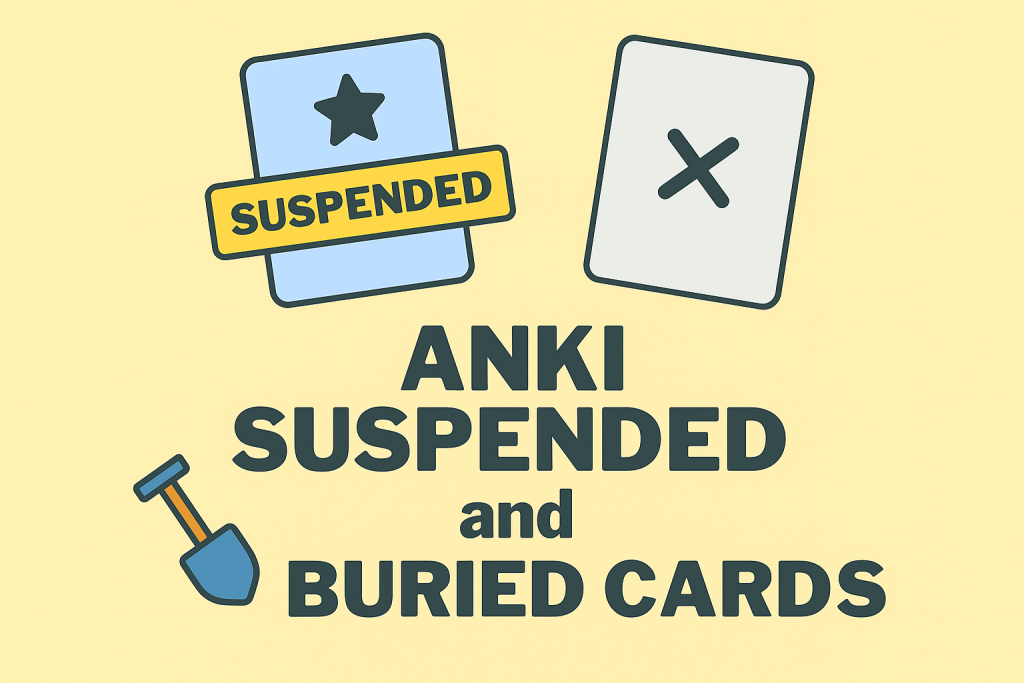
Learning a new language with Anki flashcards can be incredibly effective, but many language learners don’t realize they’re missing out on two powerful features that could dramatically improve their study efficiency: suspended and buried cards. These often-overlooked Anki functions can help you optimize your language learning sessions, manage your deck more effectively, and focus on the vocabulary and grammar concepts that truly need your attention.
Whether you’re studying Spanish verb conjugations, French grammar rules, German pronunciation, or English vocabulary, understanding how to properly use suspended and buried cards will transform your Anki language learning experience.
What Are Suspended Cards in Anki?
Suspended cards in Anki are flashcards that have been temporarily removed from your active study rotation. Think of them as being put “on hold” – they won’t appear in your daily reviews until you manually reactivate them. This feature is particularly valuable for language learners who want to streamline their study sessions and focus on cards that genuinely challenge them.
When to Use Suspended Cards for Language Learning
Words You’ve Already Mastered: If you encounter a Spanish flashcard with the word “hola” (hello) and you’re at an intermediate level, suspending it makes perfect sense. You’ve mastered this basic vocabulary, and continuing to review it takes time away from learning new, more challenging content.
Temporary Difficulty Management: Sometimes you might encounter a particularly difficult grammar concept or complex vocabulary word that’s causing frustration. Rather than struggling with it repeatedly and potentially developing negative associations, you can suspend it temporarily and return to it when you feel more prepared.
Seasonal or Context-Specific Vocabulary: If you’re learning holiday-related vocabulary in July or winter sports terms in summer, suspending these cards until the appropriate season can make your learning more relevant and memorable.
Overwhelming New Content: When starting with a large Anki deck, you might feel overwhelmed by the volume of new cards. Suspending some cards allows you to focus on a manageable subset while gradually reintroducing the suspended content.
Understanding Buried Cards in Anki
Buried cards are temporarily hidden from your study session but will automatically reappear the next day (or when you manually unbury them). Unlike suspended cards, buried cards are designed for short-term management rather than long-term organization of your language learning materials.
Practical Uses for Buried Cards in Language Learning
Managing Related Cards: If you’re studying Italian and you have multiple cards for the same word (perhaps one for recognition, one for production, and one for pronunciation), you might want to bury the related cards after studying one to avoid redundancy in a single session.
Avoiding Interference: When learning similar-looking words in languages like German or Dutch, studying them too close together can cause confusion. Burying one temporarily can help prevent interference while your brain processes the new information.
Energy Management: During intensive study sessions, if you encounter a particularly challenging card that requires significant mental effort, you might bury related cards to return to them when you’re more mentally fresh.
Review Spacing: Sometimes you might want to see a card again in the same study session but not immediately. Burying it temporarily achieves this spacing effect.
How to Suspend Cards in Anki: Step-by-Step Guide
Suspending cards in your Anki language learning decks is straightforward:
- During Review: While reviewing cards, you can suspend the current card by pressing the “@” key or by tapping the “More” button and selecting “Suspend Card”
- From the Browser:
- Open Anki and click “Browse”
- Search for specific cards or browse your deck
- Select the cards you want to suspend
- Right-click and choose “Toggle Suspend” or use Ctrl/Cmd + J
- Suspended cards will appear with a different color or marking
- Bulk Suspending: You can suspend multiple cards at once by selecting them in the browser and using the toggle suspend function
How to Unsuspend Cards When You’re Ready
Reactivating suspended cards is equally simple:
- Open the Browser: Click “Browse” in your main Anki window
- Search for Suspended Cards: Use the search query “is:suspended” to find all suspended cards in your language decks
- Select Cards to Unsuspend: Choose the specific cards you want to reactivate
- Toggle Suspend: Right-click and select “Toggle Suspend” or use Ctrl/Cmd + J
The cards will immediately return to your active study rotation and appear in future review sessions according to Anki’s scheduling algorithm.
Managing Buried Cards Effectively
Automatic Unburying: Buried cards automatically return to your active deck when the clock rolls over to a new day, making them perfect for temporary management.
Manual Unburying: If you want to access buried cards before the next day:
- Go to your deck overview screen
- Look for the “Unbury” button at the bottom
- Click it to immediately restore all buried cards to your current session
During Review: You can bury the current card by pressing “-” or using the “More” menu during your review session.
Strategic Applications for Language Learners
Optimizing Your Spanish Flashcard Deck
When using Spanish language flashcards, you might suspend basic vocabulary you’ve mastered (like numbers, colors, or family members) while keeping challenging verb conjugations and subjunctive mood cards active. This ensures your study time focuses on areas where you need the most improvement.
German Pronunciation Practice
For German learners working with pronunciation flashcards, you might bury cards with similar sounds that you tend to confuse, studying them separately to avoid interference. Once you’ve mastered one sound, you can unbury the related cards for comparative practice.
French Grammar Management
French grammar can be overwhelming, especially the subjunctive mood and the subtle usage of prepositions and pronouns. You might suspend advanced grammar concepts while focusing on foundational rules, then gradually unsuspend more complex topics as your understanding develops.
Vocabulary Expansion Strategy
Use suspended cards to create a “vocabulary bank” of words you’ve encountered but aren’t ready to actively study. As your language level improves, periodically unsuspend batches of these cards to expand your active vocabulary systematically.
Common Mistakes to Avoid
Over-suspending: Don’t suspend cards too quickly. Sometimes a word might seem easy in one context but challenging in another. Make sure you truly have mastered the content before suspending.
Forgetting Suspended Cards: Regularly review your suspended cards to determine if you’re ready to reactivate them. Set reminders to check your “is:suspended” search results monthly.
Misunderstanding the Difference: Remember that buried cards return automatically the next day, while suspended cards remain inactive until manually reactivated. Choose the appropriate function based on your needs.
Suspending Too Many Cards: If you suspend too many cards, you might not have enough active content for effective study sessions. Maintain a balance between challenge and manageability.
Advanced Tips for Power Users
Tagging Strategy
Combine suspended and buried cards with Anki’s tagging system. Tag suspended cards with reasons like “mastered,” “too_difficult,” or “seasonal” to make future management easier.
Deck Subdivision
Consider creating separate decks for different proficiency levels rather than suspending many cards. This approach can be more organized for extensive language learning collections.
Regular Maintenance
Schedule weekly or monthly “deck maintenance” sessions where you review suspended cards, unsuspend those you’re ready for, and suspend newly mastered content.
Integration with Other Anki Features
Suspended and buried cards work seamlessly with other Anki features like filtered decks, custom study sessions, and add-on functionalities. This integration allows for sophisticated study strategies that can adapt to your evolving language learning needs.
Creating Focused Study Sessions
Use filtered decks to create targeted study sessions with specific subsets of your suspended cards. This approach is excellent for reviewing old content or preparing for specific situations (like travel vocabulary before a trip).
Combining with Spaced Repetition
The beauty of suspended and buried cards is that they don’t interfere with Anki’s core spaced repetition algorithm. When you unsuspend a card, it returns with its original scheduling information intact, ensuring optimal long-term retention.
Maximizing Your Language Learning Journey
Understanding and effectively using suspended and buried cards is just one aspect of successful language learning with Anki. These features, combined with well-designed flashcard decks for vocabulary, pronunciation, and grammar, can significantly accelerate your progress in Spanish, French, Italian, German, English, Dutch, Polish, or any other language you’re studying.
The key is to use these features strategically rather than as a way to avoid difficult content permanently. They should serve your learning goals by helping you focus on the most relevant and challenging material while keeping mastered content available for periodic review.
Ready to take your language learning to the next level?
Subscribe to the SPEAKADA WEEKLY newsletter for exclusive tips, strategies, and insights on maximizing your Anki flashcard studies. Our weekly newsletter delivers practical advice on everything from creating effective pronunciation flashcards to managing large vocabulary decks, plus early access to new language learning resources and techniques that aren’t available anywhere else. Join thousands of successful language learners who rely on our expert guidance to accelerate their progress.
Remember, successful language learning isn’t just about the tools you use – it’s about using them intelligently. Suspended and buried cards are powerful features that, when used correctly, can transform your Anki experience from overwhelming to optimized, helping you achieve fluency faster and more efficiently than ever before.
Whether you’re just starting your language learning journey or looking to refine your existing study strategies, mastering these hidden Anki features will give you a significant advantage in achieving your linguistic goals.

Make Flashcards Online to Learn Spanish Now One of the biggest challenges when learning Spanish is figuring out how to Read more

Most language learners aim for 10 Anki cards per day — but is that right for you? Discover the 3 Read more

Cloze Deletion Anki Guide - My Experience and What I Use Now In this article, I'm going to be talking Read more
Grammatical Gender and How to Learn Gender Nouns With Anki Recently we were asked a question about the use of Read more