
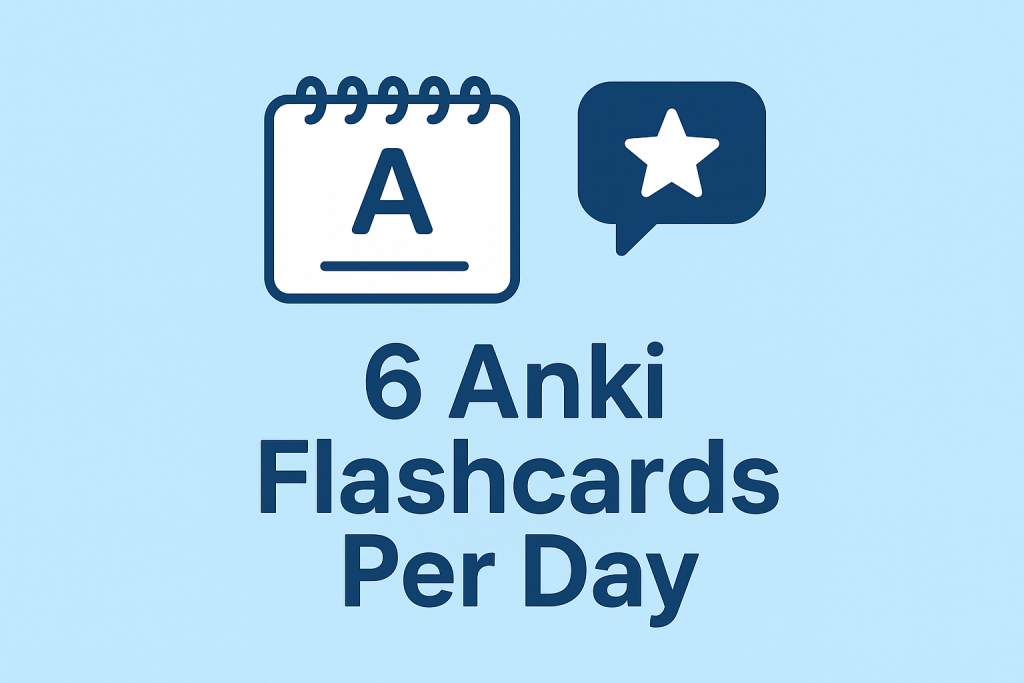
Have you ever found yourself staring at an untouched Anki deck, feeling guilty about your stalled language learning progress? You’re not alone. Many language learners fall into the trap of setting unrealistic daily goals, leading to burnout and abandoned study sessions. But what if I told you that just 6 flashcards per day could completely transform your language learning journey?
The Wall Every Language Learner Hits
Picture this scenario: You start your language learning journey with enthusiasm, setting ambitious goals to study 50+ Anki flashcards daily. For a few weeks, maybe even months, you maintain this pace. Then life happens. Work gets busy, personal commitments pile up, and suddenly your Anki flashcard practice becomes another source of stress rather than joy.
This is the wall that stops most language learners in their tracks. The guilt of “falling behind” combined with the overwhelming prospect of catching up creates a vicious cycle that kills motivation. Many learners convince themselves they’re still making progress by watching Netflix in their target language or having occasional conversations, but deep down, they miss that tangible sense of daily progress that only structured learning can provide.
The Power of Starting Ridiculously Small
The breakthrough comes when you flip the script entirely. Instead of aiming for perfection, aim for consistency. Instead of overwhelming yourself with ambitious targets, start with something so small it seems almost silly not to do it: just 5-6 Anki cards per day.
This approach isn’t about lowering your standards—it’s about understanding the psychology of habit formation and sustainable learning. When you consistently complete a small, manageable task, your brain associates the activity with success rather than struggle. This positive association becomes the foundation for building momentum and expanding your practice naturally.
Why 6 Cards Work When 50 Don’t
The magic of daily language learning habits lies not in their intensity but in their consistency. Here’s why starting with 6 cards is more effective than attempting 50:
Psychological Benefits:
- Eliminates the fear of failure
- Creates immediate sense of accomplishment
- Builds positive associations with study time
- Reduces decision fatigue about whether to study
Practical Advantages:
- Fits into any schedule (takes just 5-10 minutes)
- Easier to maintain during busy periods
- Allows for perfect daily retention review
- Creates space for quality over quantity learning
The Math That Will Excite You
Let’s break down the numbers that make this approach so powerful for vocabulary acquisition through spaced repetition:
Daily Practice:
- 6 new cards × 365 days = 2,190 words per year
- Even accounting for missed days: ~2,000 new words annually
Comparative Context:
- Native-speaking children typically acquire 1,000 words per year
- Adult learners using this method: 2,000 words per year
- You’re literally doubling the natural language acquisition rate
What 2,000 Words Means for Your Fluency
Understanding 2,000 words in your target language isn’t just a nice milestone—it’s a game-changer that opens doors to:
- Conversational Fluency: Handle most everyday situations with confidence
- Reading Comprehension: Understand approximately 80% of common texts
- Express Complex Ideas: Move beyond basic phrases to nuanced communication
- Cultural Connection: Engage with native content like books, podcasts, and films
- Professional Opportunities: Use your target language in work contexts
This vocabulary foundation transforms you from a beginner struggling with basic phrases to an intermediate speaker ready for authentic interactions.
Building Momentum: The Compound Effect of Consistency
Consistent Anki practice creates what psychologists call the compound effect. Each day’s small effort builds upon the previous day’s work, creating exponential results over time. Here’s how this momentum develops:
Week 1-2: Habit Formation
- Focus purely on consistency
- Celebrate showing up daily
- Notice reduced resistance to study time
Month 1: Confidence Building
- Begin recognizing previously learned words in context
- Feel more comfortable with study routine
- Start naturally wanting to do more cards
Month 3: Accelerated Learning
- Vocabulary connections become stronger
- Retention rates improve significantly
- Language patterns start emerging naturally
Month 6: Transformation Point
- Substantial vocabulary base established
- Natural expansion to additional learning activities
- Confidence to increase daily card count if desired
Overcoming Common Obstacles
Even with a minimal daily commitment, language learners face predictable challenges. Here’s how to address them while maintaining your daily flashcard routine:
“I Don’t Have Time”
The 6-card approach requires just 5-10 minutes daily. Consider these time-finding strategies:
- Study during your morning coffee
- Review cards during commute breaks
- Use waiting time (appointments, lines, etc.)
- Replace 10 minutes of social media scrolling
“I’m Not Making Fast Enough Progress”
Reframe your perspective on progress. Fast isn’t always sustainable. Consider:
- Trust the mathematical certainty: 6 cards × 365 days = results
- Focus on consistency streaks rather than speed
- Celebrate process victories, not just outcome achievements
- Remember: slow and steady learners often surpass sprint-and-crash students
“I Keep Forgetting Words”
This is where spaced repetition systems like Anki shine. The forgetting is part of the learning process:
- Anki’s algorithm optimizes review timing for long-term retention
- Forgetting and re-learning actually strengthens memory pathways
- Trust the system—it’s designed around memory science
- Focus on recognition first, production will follow naturally
Expanding Beyond the Basics
Once you’ve established your 6-card daily habit and built solid momentum, you can strategically expand your language learning with flashcards:
Adding Different Card Types
- Pronunciation flashcards: Master accurate pronunciation from day one
- Grammar flashcards: Build systematic understanding of language structures
- Phrase flashcards: Learn vocabulary in meaningful contexts
- Cultural flashcards: Understand contextual usage and cultural nuances, such as idioms or local slang
Integrating with Other Learning Methods
Your consistent Anki practice becomes the foundation for:
- More meaningful conversations with native speakers
- Better comprehension of authentic materials (podcasts, books, films)
- Increased confidence in formal language classes
- Effective preparation for language proficiency exams
The Science Behind Small Habits
Habit formation research supports the effectiveness of starting small. Studies show that:
- Habits requiring less than 2 minutes are 65% more likely to stick
- Consistency matters more than intensity for long-term retention
- Small wins create dopamine releases that reinforce behavior
- Gradual progression prevents overwhelm and burnout
This scientific backing isn’t just academic theory—it’s practical wisdom for sustainable language learning success.
Real-World Application: Your Next Steps
Ready to implement this sustainable language learning approach? Here’s your action plan:
Week 1: Foundation Setting
- Choose 6 cards from your target language Anki deck
- Set a specific daily study time (same time each day works best)
- Focus only on consistency—don’t worry about perfect performance
- Track your daily completions to build momentum
Week 2-4: Habit Reinforcement
- Maintain the same 6-card commitment
- Notice improvements in recognition and recall
- Celebrate completion streaks
- Resist the urge to dramatically increase daily cards
Month 2+: Natural Expansion
- Continue daily minimum of 6 cards
- Add cards only when 6 feels effortless
- Introduce different card types gradually
- Trust the long-term process over short-term gains
Stay Connected with Smart Learning Strategies
Building sustainable language learning habits requires ongoing support and fresh strategies. That’s why we created SPEAKADA WEEKLY—our newsletter dedicated to helping smart language learners like you maximize their Anki flashcard practice.
Subscribe to SPEAKADA WEEKLY to receive:
- Weekly tips for optimizing your flashcard practice
- Evidence-based strategies for faster vocabulary retention
- Pronunciation techniques that native speakers notice
- Grammar learning shortcuts that actually work
- Real success stories from fellow language learners
- Exclusive resources not available anywhere else
Join thousands of successful language learners who rely on SPEAKADA WEEKLY for consistent motivation and practical guidance. Subscribe here to transform your language learning journey with expert insights delivered directly to your inbox.
Your Language Learning Future Starts Today
The path to fluency doesn’t require dramatic gestures or overwhelming commitments. It requires one simple decision: to start with just 6 cards today. Tomorrow, do 6 more. The day after that, another 6.
In one year, you’ll have built a vocabulary foundation that supports genuine communication in your target language. You’ll have developed unshakeable study habits that extend far beyond language learning. Most importantly, you’ll have proven to yourself that consistent small actions create extraordinary results.
Your foreign language fluency is waiting for you. Are you ready to start your streak?
The beauty of this approach is its simplicity and scalability. Once you’ve mastered consistency with one language, adding others becomes a natural extension of your established routine. But for now, focus on your priority language. Six cards a day. Starting today.
Remember: You don’t have to be perfect. You just have to be consistent. One card at a time, one day at a time, you’re building the vocabulary foundation that will unlock fluency in your target language.
Take action now: Open your Anki deck, select 6 cards, and begin the journey that will transform your language learning forever.

Make Flashcards Online to Learn Spanish Now One of the biggest challenges when learning Spanish is figuring out how to Read more
Most language learners aim for 10 Anki cards per day — but is that right for you? Discover the 3 Read more

Cloze Deletion Anki Guide - My Experience and What I Use Now In this article, I'm going to be talking Read more
Grammatical Gender and How to Learn Gender Nouns With Anki Recently we were asked a question about the use of Read more